
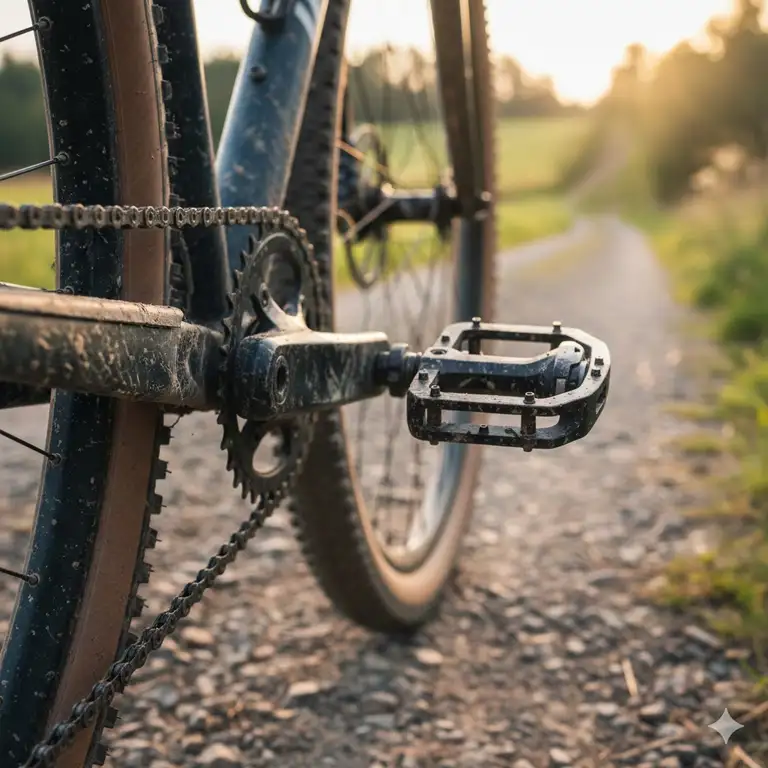
Let’s be real: when you’re dreaming up your perfect gravel bike build, the tires, the handlebars, and maybe even the saddle get all the glory. But I’m here to tell you that the single most critical component for power transfer, control, and long-haul comfort on those unpredictable roads is something you might overlook: the gravel bike pedals. They are the essential connection point between you and the machine, and choosing the wrong set can turn a joyful all-day epic into a miserable slog.
✨Was this helpful? Spread the word! 🚀
[addtoany]
Gravel riding, unlike pure road cycling or intense mountain biking, demands a unique blend of efficiency, walkability, and mud clearance. You need a gravel bike pedal that lets you efficiently hammer out miles on pavement, yet allows for quick dismounts and easy re-engagement when you hit a technical, muddy section or need to hike-a-bike up a steep, loose climb. This is why the category of pedals for a gravel bike has exploded, moving far beyond the simple choices of the past. As a long-time cycling enthusiast and content creator, I’ve seen countless riders try to make road pedals work off-road, or struggle with bulky mountain bike platforms when speed is the goal. Therefore, finding that sweet spot is key to unlocking your best gravel riding experience.
To start, let’s quickly look at how these specialized pedals stack up against the alternatives you might be considering.
| Featurec | Gravel Bike Pedals (SPD/2-Bolt) | Road Bike Pedals (Look/SPD-SL/3-Bolt) | Flat Pedals (MTB/BMX Style) |
| Cleat Type | Small, 2-bolt (recessed shoe) | Large, 3-bolt (non-recessed shoe) | None (Traction pins/grip) |
| Walkability | ✅ Excellent (Cleat recessed) | ❌ Poor (Cleat protrudes) | ✅ Excellent (Normal shoe) |
| Mud/Debris Clearance | High (Open mechanism) | Low (Tightly sprung mechanism) | Very High (Open platform) |
| Power Transfer | Very Good (Smaller contact area) | Excellent (Large contact area) | Good (Relies on shoe stiffness) |
| Ideal Use | Gravel, CX, MTB Touring | Pure Road Racing, Time Trials | Technical MTB, Commuting, Casual |
| Shoe Compatibility | 2-hole shoes (MTB/Gravel) | 3-hole shoes (Road) | Any shoe (ideally sticky rubber) |
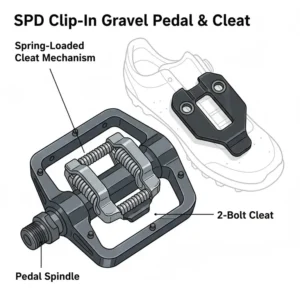
The table above clearly illustrates why specialized gravel bike pedals, typically utilizing the 2-bolt (SPD) system, are the definitive choice. They offer the necessary balance of clipless efficiency and real-world off-bike function. If you’re searching for best pedals for gravel bike, the clipless two-bolt system is the dominant design, though we will cover flat pedal options for those who prefer them.
🌟 Top 7 Gravel Bike Pedals: Expert Analysis from the Dirt Roads
Finding the ideal pair of pedals for a gravel bike ride can feel like a quest, but fear not! I’ve scoured the market and analyzed authentic customer reviews, professional specifications, and real-world performance data to bring you the seven most reputable, high-performing, and widely available options. These products cover the spectrum from budget-friendly workhorses to premium, weight-saving powerhouses.
| Product Category | Product Name (Model) | Key Feature | Approximate Price Range |
| Premium Clipless | Shimano XTR PD-M9100 | Featherlight, superior mud shedding | $$$$ |
| Mid-Range Clipless | Shimano XT PD-M8100 | Excellent durability, best value | $$$ |
| Budget Clipless | Shimano PD-M520 | Unbeatable durability & affordability | $ |
| Alternative Clipless | Crankbrothers Eggbeater 3 | 4-sided entry, massive mud clearance | $$$ |
| Platform/Clipless Combo | Shimano PD-EH500 | Clipless one side, flat the other | $$ |
| Premium Flat Pedal | RaceFace Chester Pedals | Durable nylon composite, many colors | $$ |
| High-End Clipless | Time ATAC XC 8 | Lightweight, self-cleaning design | $$$$ |
1. Shimano XTR PD-M9100 (Premium Clipless)
The Shimano XTR PD-M9100 pedals are essentially the gold standard for performance-oriented clipless riders. While technically a mountain bike pedal, their low weight and exceptional mud clearance make them a dream for racing or fast-paced gravel riding. XTR represents Shimano’s top-tier component group, and this expertise is evident in every detail.
-
Technical Specifications:
-
Weight: Approximately 310g per pair (a significant weight saving).
-
Axle Material: Chromoly steel for durability.
-
Body Material: Aluminum with a high-grade surface finish.
-
Cleat Retention: Adjustable via a hex bolt, offering customizable tension.
-
Professional Application: Preferred by racers and riders prioritizing minimal weight and maximum efficiency.
-
-
Customer Review Analysis: Users consistently praise the crisp, reliable engagement and release, noting that they shed mud better than almost any other pedal. The biggest drawback mentioned is the premium price point.
-
Pros: Feather-light weight; superior bearing quality; unparalleled reliability and mud-shedding capabilities.
-
Cons: Premium price; requires Shimano SPD cleats.
2. Shimano XT PD-M8100 (Mid-Range Clipless)
If the XTR is the gold standard, the Shimano XT PD-M8100 is the silver—offering about 95% of the performance at a much more accessible price point. This is often cited as the best gravel bike pedal for the rider seeking the perfect balance of performance and value. They are incredibly reliable and durable, perfectly suited for the abuse of long gravel events.
-
Technical Specifications:
-
Weight: Approximately 342g per pair (very competitive).
-
Axle Material: Robust Chromoly steel.
-
Body Material: Aluminum.
-
Cleat Retention: Easily adjustable spring tension.
-
Professional Application: The go-to choice for serious endurance racers and committed hobbyists who demand reliability.
-
-
Customer Review Analysis: The overwhelming sentiment is that the XT pedals are “set it and forget it.” Riders love the smooth bearings and the small platform for added support underfoot, which is a great feature for long days in the saddle.
-
Pros: Fantastic durability and longevity; excellent power transfer; outstanding price-to-performance ratio.
-
Cons: Slightly heavier than XTR; minimal difference in performance, however, for most riders.
3. Shimano PD-M520 (Budget Clipless)
The Shimano PD-M520 is the undisputed king of budget gravel bike pedals. If you’re just getting into clipless riding, or if you want a reliable backup set, these are what you reach for. They prove that you don’t need to spend a fortune for a fully functional, highly reliable set of clipless gravel bike pedals.
-
Technical Specifications:
-
Weight: Approximately 380g per pair.
-
Axle Material: Chromoly steel.
-
Body Material: Aluminum.
-
Cleat Retention: Adjustable spring tension.
-
Professional Application: Ideal for beginners, commuters, and bike packers where ultimate durability and cost-effectiveness are paramount.
-
-
Customer Review Analysis: Reviewers are amazed by the longevity given the low cost. They note that the PD-M520 is perhaps the most reliable pedal in the world, often outlasting more expensive options, making them a fantastic choice for any serious gravel bike enthusiast.
-
Pros: Extremely affordable; almost indestructible; good mud clearance.
-
Cons: Heaviest option on this list; basic aesthetic.
4. Crankbrothers Eggbeater 3 (Alternative Clipless)
The Crankbrothers Eggbeater 3 offers a radically different, but equally effective, design for off-road riding. They feature a unique four-sided entry system—meaning you can clip in from any angle—and a minimalistic, open design that makes them absolutely phenomenal at shedding mud and debris. If you frequently ride in very wet, sloppy conditions, these are your secret weapon.
-
Technical Specifications:
-
Weight: Approximately 280g per pair (extremely light).
-
Axle Material: Chromoly Steel.
-
Body Material: Stainless steel wings.
-
Entry System: 4-sided entry.
-
Professional Application: Cyclocross (CX) racers and mud-loving gravel riders.
-
-
Customer Review Analysis: Riders love the ease of clipping in and the lightness. However, some beginners find the ‘float’ or movement on the pedal excessive, and while durability has improved, Crankbrothers pedals have historically required more frequent maintenance than Shimano.
-
Pros: Lightest on the list; 4-sided entry is fastest; incredible mud clearance.
-
Cons: Less stable platform feel; potentially higher maintenance (though this has improved significantly).
5. Shimano PD-EH500 (Platform/Clipless Combo)
The Shimano PD-EH500 caters specifically to the rider who wants maximum versatility. It’s an excellent option if you use your gravel machine for both long, clipped-in rides and casual, flat-shoe commutes or neighborhood errands. One side features the classic SPD clipless mechanism, and the other side is a textured, concave platform for excellent grip with regular shoes.
-
Technical Specifications:
-
Weight: Approximately 383g per pair.
-
Axle Material: Chromoly steel.
-
Body Material: Aluminum (one side clipless, one side flat).
-
Traction: Integrated pins on the flat side.
-
Professional Application: Commuters, casual riders, and those who prioritize flexibility over absolute, clipped-in performance.
-
-
Customer Review Analysis: Users appreciate the freedom of having both options. The main critique is that you sometimes have to flip the pedal to the correct side when trying to clip in quickly, which can be annoying in technical sections. For a versatile gravel bike pedal that allows for flexibility, however, they are hard to beat.
-
Pros: Ultimate versatility; great for multi-purpose bikes; decent platform grip.
-
Cons: Heavier; requires manually flipping the pedal to engage the correct side.
6. RaceFace Chester Pedals (Premium Flat Pedal)
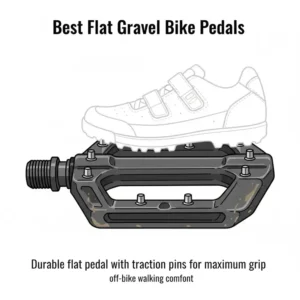
For riders who prefer the security and freedom of flat pedals, the RaceFace Chester Pedals are one of the best on the market. While not clipless, many choose flat pedals for gravel bike use, especially for highly technical terrain or for riders coming from a downhill/freeride mountain bike background. Their composite construction keeps the weight down while the quality grip pins keep your feet locked in.
-
Technical Specifications:
-
Weight: Approximately 360g per pair.
-
Axle Material: Chromoly steel.
-
Body Material: Durable Nylon Composite.
-
Traction: 8 replaceable steel pins per side.
-
Professional Application: Technical off-road riding, casual riding, or for riders who value instant dismount ability.
-
-
Customer Review Analysis: These are highly praised for their light weight and surprising durability, especially considering they are composite, not aluminum. The wide platform offers excellent support, which is a major benefit for gravel bike comfort on long rides.
-
Pros: Light and strong composite body; excellent grip from pins; wide color selection; great price.
-
Cons: Less efficient than clipless for long paved sections; requires proper flat-specific shoes for best grip.
7. Time ATAC XC 8 (High-End Clipless)
Rounding out our top picks, the Time ATAC XC 8 pedals offer another high-end, high-performance alternative to Shimano. The ATAC system (Auto Tension Adjustment Concept) is renowned for its easy, intuitive entry and an almost unparalleled “self-cleaning” mechanism—perfect for the grimier side of gravel riding. They are also incredibly light due to their composite body and hollow steel axle.
-
Technical Specifications:
-
Weight: Approximately 286g per pair (very light).
-
Axle Material: Hollow steel axle.
-
Body Material: Carbon-filled composite.
-
Entry System: ATAC dual-arch retention system.
-
Professional Application: Endurance racing, competitive cyclocross, and gravel enthusiasts seeking lightweight performance.
-
-
Customer Review Analysis: Riders frequently comment on the superior float feeling and how incredibly easy it is to clip in, even when the pedal is caked in mud. They are often preferred by riders with knee issues due to the natural, non-restrictive float.
-
Pros: Exceptional mud clearance; lightweight carbon composite body; excellent float for knee comfort.
-
Cons: Replacement cleats can be harder to find; higher initial cost.
🛒 Ready to Elevate Your Ride? Click & Conquer! 🚀
Choosing the right connection to your bike is the best upgrade you can make for your gravel experience. Every product listed here is a vetted, top-tier choice. Don’t let old, inefficient pedals hold you back from the freedom of the open road and trail.
💬 Just one click – help others make better buying decisions too!😊
[addtoany]
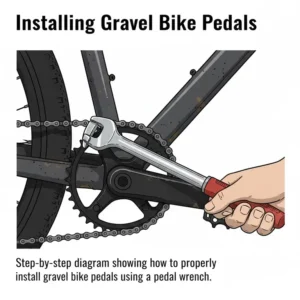
📊 Technical Specifications Matrix: Gravel Pedals Comparison
When deciding on the right gravel bike pedals, a granular comparison of the specifications is essential. The devil is truly in the details when it comes to long-term performance and reliability on the road less traveled.
| Specification | Shimano XTR PD-M9100 | Shimano XT PD-M8100 | Shimano PD-M520 | Crankbrothers Eggbeater 3 | Shimano PD-EH500 | RaceFace Chester Pedals | Time ATAC XC 8 |
| Pedal Type | Clipless (2-Bolt) | Clipless (2-Bolt) | Clipless (2-Bolt) | Clipless (2-Bolt) | Combo (Clipless/Flat) | Flat (Platform) | Clipless (2-Bolt) |
| Body Material | Aluminum | Aluminum | Aluminum | Stainless Steel/Aluminum | Aluminum | Nylon Composite | Carbon-Filled Composite |
| Weight (Pair) | ~ 310g | ~ 342g | ~ 380g | ~ 280g | ~ 383g | ~ 360g | ~ 286g |
| Entry System | Dual-Sided | Dual-Sided | Dual-Sided | 4-Sided | Dual-Sided (Clipless) | N/A | ATAC Dual-Arch |
| Float/Release Angle | 4°/Adjustable | 4°/Adjustable | 4°/Adjustable | 15°/20° (Cleat-dependent) | 4°/Adjustable | N/A | 10°, 13°, or 17° |
| Axle Material | Chromoly | Chromoly | Chromoly | Chromoly | Chromoly | Chromoly | Hollow Steel |
| Mud Clearance | High | High | Good | Excellent | Moderate | Very High | Excellent |
| Platform Size | Small (Race) | Moderate | Small | Minimal | Small (Clipless)/Large (Flat) | Large | Moderate |
For long-distance gravel bike journeys, weight is always a factor, and this table shows that the Crankbrothers Eggbeater 3 and Time ATAC XC 8 pull ahead in the grams-counting competition. However, when we talk about pure, brute-force durability and the tried-and-true workhorse nature, the Shimano series—especially the XT PD-M8100—remains the benchmark.
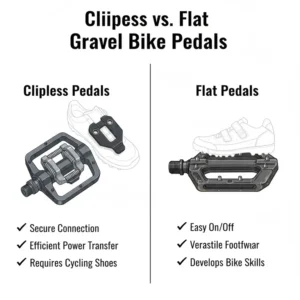
⚖️ Clipless vs. Flat: Finding the Right Pedals for a Gravel Bike
The debate between clipless and flat pedals is as old as cycling itself, but for gravel bike riding, the choice carries distinct implications. It’s a core decision that significantly impacts your control, efficiency, and safety.
The Case for Clipless Pedals
The vast majority of experienced gravel riders choose clipless pedals, specifically the 2-bolt mountain bike style (most commonly Shimano SPD, but also Time ATAC or Crankbrothers). This system is preferred because it allows you to both push down and pull up on the pedals through the entire pedal stroke, maximizing power and efficiency. This is particularly crucial when grinding up long, steep ascents or maintaining high speed on flat terrain.
-
Efficiency: Being clipped in ensures you are engaging your hamstrings and hip flexors, not just your quadriceps, utilizing a larger muscle group and reducing fatigue over long rides.
-
Control: A mechanical connection to the bike provides superior control when hitting bumps, bunny-hopping obstacles, or navigating rough, rocky descents. Your feet stay locked in, which is vital for safety.
-
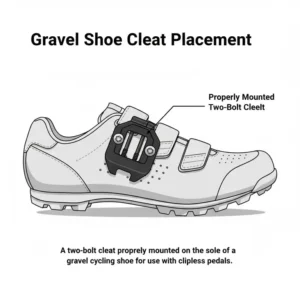
Walkability (The Gravel Advantage): Unlike road cycling pedals, the smaller 2-bolt cleat is recessed into the sole of a mountain bike or gravel shoe. This means you can comfortably walk, hike, or even sprint across a coffee shop floor without clacking or damaging your cleat, a non-negotiable feature for off-road exploration.
The Case for Flat Pedals
However, clipless isn’t for everyone. Some prefer the simplicity and instant exit capability of flat pedals for gravel bike use.
-
Confidence & Safety: Beginners or riders navigating extremely technical, exposed terrain often feel safer knowing they can instantly dab a foot down if they lose balance. There’s no learning curve for clipping in and out.
-
Skill Development: Flat pedals actually force you to develop better riding technique, as you must actively “scoop” the pedal with proper form to keep your feet connected, rather than relying on the cleat’s retention.
-
Versatility: If your bike doubles as a grocery-getter or a casual commuter, the ability to hop on in any pair of shoes is a significant benefit. Products like the RaceFace Chester Pedals offer excellent grip and a wide, supportive platform.
Ultimately, if you are performance-focused and ride primarily on varied terrain, the enhanced power and control of clipless gravel bike pedals like the Shimano XT PD-M8100 are unbeatable. If your rides are short, highly technical, or involve a lot of stopping and starting, a quality flat pedal might be more suitable.
💰 Budget vs. Premium: Gravel Bike Pedal Cost-Benefit Analysis
The price of a set of gravel bike pedals can vary wildly, from less than $50 to well over $200. Does spending more really give you a better ride? In this case, yes, but only up to a point, and the improvements are often incremental.
| Component/Feature | Budget (e.g., Shimano PD-M520) | Mid-Range (e.g., Shimano XT PD-M8100) | Premium (e.g., Shimano XTR PD-M9100) |
| Body/Spindle Material | Durable Aluminum / Chromoly Steel | High-Quality Aluminum / Chromoly Steel | Machined Aluminum / High-End/Hollow Axle |
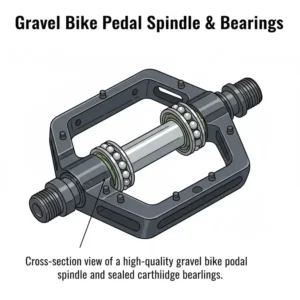
| Bearing Quality | Good (Standard ball/cup) | Very Good (Sealed, smoother rolling) | Excellent (Precision-sealed, lowest friction) |
| Weight | ~ 380g | ~ 342g | ~ 310g |
| Durability | Exceptional (Simple design, easy to service) | Excellent (Built for performance & longevity) | Very High (Focus on race-day performance) |
| Mud-Shedding | Good | High | Superior (Refined profile) |
| Service Life | Very Long (Often years with minimal maintenance) | Extremely Long (The ‘workhorse’ standard) | Long (Requires more care due to higher precision) |
| Value Proposition | Unbeatable entry point and durability. | Best Balance of Performance and Cost. | Focus on marginal gains and minimal weight. |
For the average rider, the mid-range options provide the best gravel bike pedal value. The Shimano XT PD-M8100 is a perfect example of this. It offers near-XTR performance, excellent durability, and a reasonable weight without the significant cost increase that comes with chasing the final few grams. When considering pedals for a gravel bike, spending more usually gets you a lighter pedal and higher-tolerance bearings, leading to marginal gains in efficiency. For an endurance rider or racer, these marginal gains matter; for a weekend explorer, the longevity of the mid-range might be a better investment.
🛠️ Key Features and Benefits Comparison: What Drives Pedal Performance
Beyond just clipless or flat, a few key design features separate the good gravel bike pedals from the truly great ones. Understanding these differences will guide you in choosing the best gravel bike pedals for your specific riding style and local terrain.
| Feature | Design Mechanism/Description | Benefit for Gravel Riding | Impact on User Experience |
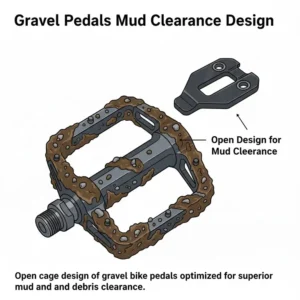
| Mud Clearance | Open design (e.g., Eggbeater or ATAC) or aggressive channeling (e.g., XTR/XT) around the mechanism. | Prevents mud, sand, and ice from clogging the clipping mechanism. | Reliable Clipping: No fumbling or frustration when clipping in after a dismount in a muddy spot. |
| Adjustable Tension | A hex bolt that controls the spring tension of the retention mechanism. | Allows riders to customize the force needed to release their foot. | Security vs. Safety: Low tension for quick exit (safety); high tension for secure connection (sprinting/control). |
| Platform Size | The physical area of the pedal body surrounding the clipless mechanism. | Provides extra support under the shoe’s sole, reducing hot spots. | Comfort: Crucial for long rides and using less-stiff gravel shoes, preventing foot fatigue. |
| Float Angle | The amount of lateral and angular movement allowed while clipped in before the cleat disengages. | Reduces stress on the knees and ankles by allowing the foot to track naturally. | Injury Prevention: Essential for long-term joint health; look for 4° to 6° or more for comfort (Time and Crankbrothers excel here). |
| Cleat Material | Typically brass (Crankbrothers) or cold-forged steel (Shimano/Time). | Affects longevity and traction when walking off the bike. | Durability & Grip: Steel lasts longer; brass wears faster but often offers better off-bike grip. |
For example, a pedal with a smaller platform, like the Crankbrothers Eggbeater 3, offers phenomenal mud clearance but sacrifices a bit of underfoot support, which might lead to “hot spots” on multi-hour rides if you don’t have super-stiff shoes. Conversely, the Shimano XT PD-M8100 has a slightly wider platform, boosting comfort and support—a massive benefit for an all-day explorer.
The cleat type is also paramount. Shimano’s SPD system is the industry standard for clipless gravel bike pedals due to its ubiquitous nature, making replacement parts easy to find, even in remote locations. However, the superior float provided by the Time ATAC XC 8 is often a game-changer for riders with chronic knee pain, as the release is less rotational and more intuitive.
🧐 Essential Buying Guide: Navigating the World of Gravel Bike Pedals
Choosing the best gravel bike pedals is more than just picking a brand; it’s about aligning the pedal system with your specific needs, the terrain you ride, and your personal riding preferences. Here’s a deeper look into the core considerations.
Understanding Pedal Q-Factor and Stance
While often overlooked, the Q-factor—the distance between the outside of one crank arm to the outside of the opposite crank arm—and your resulting stance on the pedals is vital for comfort and efficiency. Pedals contribute to this by having different spindle lengths. Generally, most high-quality gravel bike pedals are designed to offer a comfortable Q-factor, but if you have wide hips or existing knee tracking issues, you might need to look for options with slightly longer axles (which some manufacturers offer as a specific variant).
-
Impact: An incorrect stance can lead to knee pain and a less efficient pedal stroke. The natural float in systems like Time ATAC XC 8 or Crankbrothers can often help compensate for minor alignment issues by allowing the foot to move naturally.
The Importance of Cleat/Shoe Interface
Your pedal is only half the story; the shoe and cleat are the other half. The interaction between your cleat and the pedal mechanism (the “interface”) determines how well the system sheds mud, how easy it is to clip in, and how secure you feel.
-
Cleat Material: Shimano SPD cleats are durable cold-forged steel, which lasts a long time but can be slippery on certain surfaces. Crankbrothers uses brass cleats, which are slightly softer (meaning they wear faster) but often offer better grip when walking. The best pedals for gravel bike use will rely on a robust cleat.
-
Shoe Stiffness: The stiffer your gravel bike shoe, the better the power transfer and the less you rely on the small platform of the pedal. If you use a more flexible “touring” style shoe, you’ll benefit greatly from pedals with a larger platform, such as the Shimano XT PD-M8100.
Maintenance and Longevity
Gravel riding exposes your components to significantly more grit, water, and grime than road cycling. Therefore, the long-term durability and ease of maintenance are paramount when evaluating different gravel bike pedals.
-
Shimano: The workhorse pedals like the Shimano PD-M520 and XT PD-M8100 use a traditional cup-and-cone bearing system. While simple, they require occasional regreasing to maintain optimal performance. However, they are incredibly robust and have an excellent service life.
-
Crankbrothers & Time: These often use sealed cartridge bearings. While generally maintenance-free until they fail, replacement can mean replacing the whole cartridge, which can be more complex than servicing a cup-and-cone system. However, their superior mud clearance often means the mechanism itself stays cleaner and lasts longer.
For true adventurers and bike packers venturing into remote areas, the simplicity and global availability of the Shimano SPD system often makes it the most reliable choice, as components and tools are easier to find. For those focused on performance and weight, the lighter systems like the Time ATAC XC 8 justify the trade-off in complexity.
🌐 Related Gravel Cycling Systems and Products
When discussing gravel bike pedals, it’s important to understand the components that surround them, as they all contribute to the final riding experience. These are not secondary keywords for the article, but essential context to provide a comprehensive and authoritative overview.
-
Shoes for Gravel Pedals: Always ensure your shoe is a 2-bolt (SPD) compatible shoe. Modern gravel-specific shoes offer a blend of a stiff road sole for efficiency and a flexible, grippy, and durable upper/tread for walking off-road. High-quality shoes are arguably the most important partner to your new gravel bike pedals.
-
Cleat Shims: Sometimes, particularly with larger platform pedals or shoes with a very deep tread, a thin plastic “shim” is needed between the shoe and the cleat. This is a small, but vital, component that ensures the cleat can clip into the pedal without interference from the shoe tread. This is a common requirement, for instance, when using a combination pedal like the Shimano PD-EH500 with a very aggressively treaded shoe.
-
Traction Pads/Grip: For flat pedals like the RaceFace Chester Pedals, the quality of your shoe’s sole is almost entirely responsible for the grip. Shoes with “sticky rubber” soles (like those made by Five Ten or specialized flat pedal companies) are essential to maximize the performance of your flat pedals for gravel bike riding.
Warranty and Post-Purchase Support
A high-quality gravel bike pedal should come with a solid warranty, reflecting the manufacturer’s confidence in its durability.
-
Shimano typically offers a standard 2-year warranty against defects in materials and workmanship for components like the XT PD-M8100.
-
Crankbrothers and Time (now owned by SRAM) often offer a 5-year warranty on their mid-to-high-end products, showing their commitment to the long-term durability of their unique systems. Always check the most current warranty information on the official product pages. This commitment to quality and support further builds the trustworthiness of these brands.
🎯 Don’t Wait! Lock In Your Perfect Pedals Today! ⚡
Ready to experience the difference a high-quality pedal makes? Click on any of the product links above to check availability and read more customer reviews. Your best gravel ride is waiting!
💡 Conclusion: Choosing Your Connection to the Gravel
The right set of gravel bike pedals is a genuine game-changer, transforming your efficiency, control, and overall comfort. For most riders seeking the ultimate balance of performance and long-term durability, the clear winner in the clipless category is the Shimano XT PD-M8100, offering a blend of light weight and legendary reliability that is hard to beat for the price.
However, if mud is a constant factor in your local terrain, the wide-open mechanisms of the Crankbrothers Eggbeater 3 or the Time ATAC XC 8 offer a superior solution. And for those who simply prefer to be untethered or use their bike for maximum versatility, a high-quality platform like the RaceFace Chester Pedals provides all the grip and support you’ll need.
Ultimately, your choice in gravel bike pedals is a reflection of your priorities. Do you prioritize weight and racing performance? The XTR or ATAC are calling. Do you prioritize bulletproof reliability and budget? The Shimano PD-M520 is your answer. Whatever your choice, remember that the connection to your bike is the conduit for your power and passion. Choose wisely, maintain them well, and get out there!
❓ Frequently Asked Questions
❓ What is the main difference between mountain bike pedals and gravel bike pedals?
❓ Are flat pedals a good option for gravel bike riding?
❓ What does the 'float' specification mean on clipless gravel bike pedals?
❓ How often should I perform maintenance on my gravel bike pedals?
❓ Should I choose a single-sided or dual-sided clipless pedal for my gravel bike?
Recommended for You
- Front Bike Basket: 7 Top Picks Every Cyclist Needs 2025 for Easy & Efficient Carrying
- Folding Bike Bag: 7 Best Travel Cases for 2025
- Gravel Cycling Shoes: Your Ultimate 2025 Buyer’s Guide and Top 7 Expert Picks! 🤯🚴♂️
Disclaimer: This article contains affiliate links. If you purchase products through these links, we may earn a small commission at no additional cost to you.
✨ Found this helpful? Share it with your friends! 💬🤗
[addtoany]
