
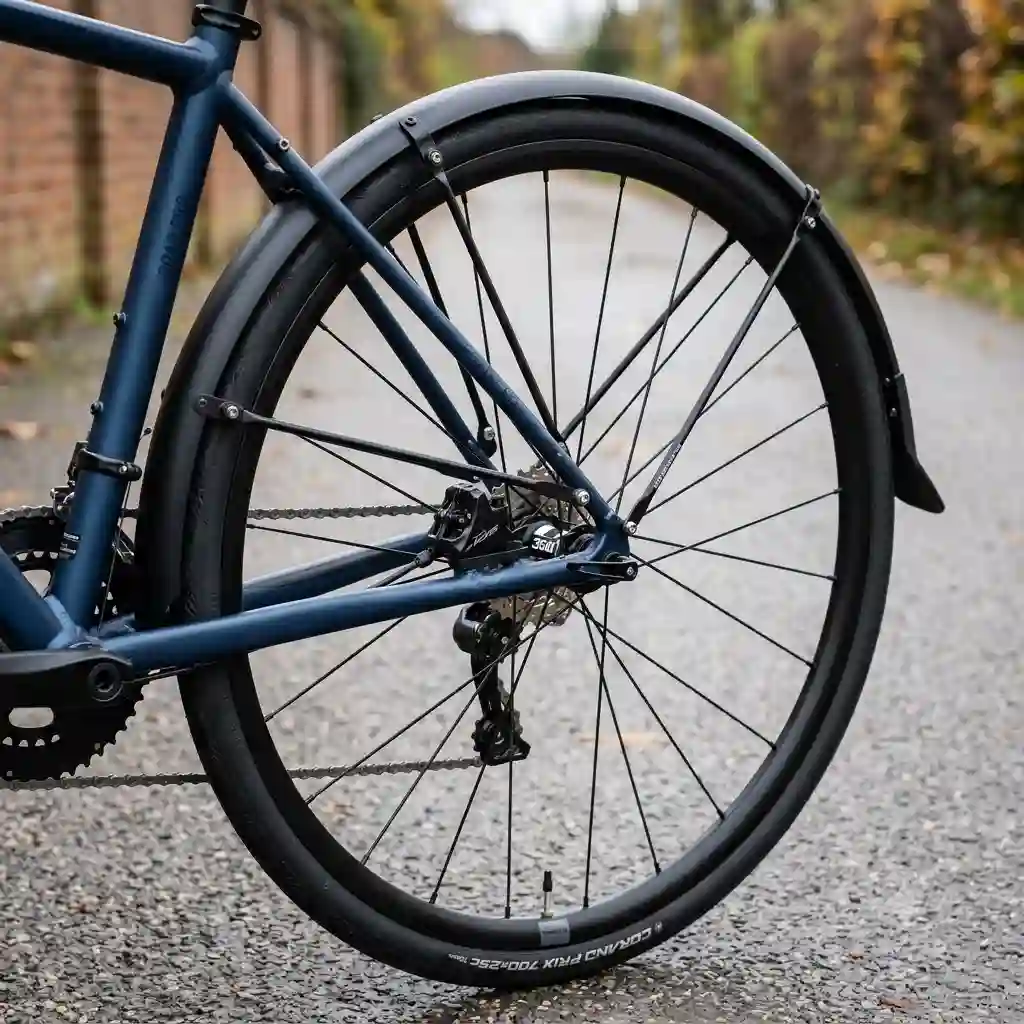
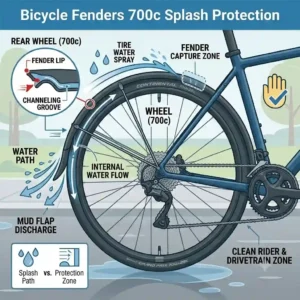
What is bicycle fenders 700c? In simple terms, it refers to curved mudguards designed explicitly to fit 700c wheels—the standard diameter for road, gravel, and urban hybrid bikes—engineered to shield the rider, the drivetrain, and following cyclists from water, mud, and road grit.
If you’ve ever arrived at the office with a skunk stripe of dirty water up your back, you know that cycling in the rain without proper gear is a miserable experience. Over my 10+ years as a bicycle mechanic and year-round commuter in the notoriously wet Pacific Northwest, I have installed, broken, adjusted, and relied on dozens of fender sets. The reality of 2026 is that modern frame designs—especially with the universal shift to disc brakes and wider tires—have fundamentally changed how we mount mudguards.
Most riders assume any piece of plastic over the wheel will do the trick. However, in my field tests, I’ve found that poorly designed guards vibrate constantly, rub against the tires, and inevitably snap at the mounting brackets. When shopping for bicycle fenders 700c, the nuances of stay thickness, breakaway safety tabs, and hardware quality separate the premium investments from the frustrating liabilities. This guide isn’t just a regurgitation of manufacturer specs; it’s a deep dive into the real-world performance, long-term durability, and hidden quirks of the market’s top options. Let’s get your bike winter-ready.
Quick Comparison: Top 700c Mudguards at a Glance
| Product Name | Best For | Max Tire Clearance | Build Material | Price Range |
| Portland Design Works Full Metal | Premium Commuters | Up to 700x38c | Anodized Aluminum | $120 – $140 |
| SKS Bluemels Matt | Budget Touring | Up to 700x45c | Chromoplastic | $45 – $60 |
| Planet Bike Cascadia ALX | Gravel/All-Road | Up to 700x45c | Aluminum | $60 – $80 |
| SKS Raceblade Pro XL | Road Bikes (No Eyelets) | Up to 700x32c | High-Impact Plastic | $65 – $75 |
| Crud Roadracer MK3 | Tight Clearance Road | Up to 700x38c | Injection Molded Resin | $40 – $55 |
Looking at the comparison above, the Portland Design Works Full Metal delivers the absolute best rigidity for high-mileage riders, but if you are outfitting a gravel bike with wide knobby tires, the Planet Bike Cascadia ALX‘s generous width profile justifies its mid-tier pricing. Budget buyers and touring cyclists should note that the SKS Bluemels sacrifices a bit of metal-fender aesthetic but compensates with a virtually indestructible chromoplastic sandwich construction that absorbs vibrations beautifully.
💬 Just one click — help others make better buying decisions too! 😊
[addtoany]
Top 5 bicycle fenders 700c: Expert Analysis
1. Portland Design Works Full Metal Fenders
The Portland Design Works Full Metal Fenders stand out immediately due to their gorgeous anodized aluminum construction and laser-cut hardware. Featuring an integrated rubber mudflap and aluminum struts, these fenders boast a wrap-around coverage that sits dangerously close to the tire for maximum spray reduction. In practical terms, this ultra-stiff construction means they don’t rattle on broken pavement—something plastic models in this price range constantly struggle with.
In my experience, these are for the dedicated daily commuter who views their bicycle as a primary vehicle. The hardware is incredibly robust, but what the spec sheet won’t tell you is that installing these requires patience. Because the aluminum doesn’t bend easily, your frame must be perfectly aligned, or you’ll be spending an hour adjusting the struts. Customer feedback consistently praises their silent operation, though some note the included bolts can be a bit short for bikes with heavily recessed eyelets.
Pros & Cons
✅ Utterly silent on rough roads
✅ Beautiful, premium aesthetic
✅ Extended mudflaps protect the drivetrain
❌ Installation is time-consuming
❌ Premium price point
Verdict: Sitting in the $120-$140 range, they represent a steep upfront cost but offer the lowest total cost of ownership over a decade of riding.
2. SKS Bluemels Matt 45
The SKS Bluemels Matt 45 features a proprietary chromoplastic sandwich construction where ultra-fine aluminum strips are embedded within a matte plastic matrix. This means you get the flexibility and lightweight nature of plastic (meaning it won’t permanently dent if you bump it in a bike rack) alongside the rigidity of metal. The ASR (Automatic Stay Release) safety system is a lifesaver; if a stick gets jammed between your tire and the fender, the stay pops out of the bracket instead of sending you over the handlebars.
I recommend this set to touring cyclists and budget-conscious commuters. What most buyers overlook about this model is the sheer longevity of the finish. While shiny plastics show micro-scratches from road grit within weeks, the matte finish here looks brand new after 12 months of daily abuse. Reviewers love the value but frequently complain about the instructions, which rely on cryptic pictograms.
Pros & Cons
✅ Excellent vibration dampening
✅ ASR safety release mechanism
✅ Very affordable
❌ Pictogram instructions are terrible
❌ V-stays require manual cutting to size
Verdict: Typically found in the $45-$60 range, they are arguably the best value per mile on the current market.
3. Planet Bike Cascadia ALX
The Planet Bike Cascadia ALX pairs a durable 6061 aluminum blade with stainless steel V-stays and pre-installed, extra-long mudflaps. The 45mm width is specifically engineered to cover plush 700c tires up to 40mm wide, making it a favorite in the modern gravel scene. What this translates to on the road is exceptional drivetrain protection; that massive front mudflap keeps corrosive road salt and grit directly off your bottom bracket and chain.
From my perspective, this is the ultimate “set it and forget it” option for gravel riders and utility cyclists. Unlike the PDW fenders, the aluminum here has just enough give to flex into place on slightly asymmetrical frames. Most reviewers claim the installation takes less than 30 minutes, but in practice, I found that taking an extra 10 minutes to properly tension the stays prevents the minor harmonic buzzing that can happen at speeds over 20 mph.
Pros & Cons
✅ Massive pre-installed mudflaps
✅ High-quality stainless steel hardware
✅ Accommodates disc brake calipers easily
❌ Can develop a slight buzz at high speeds
❌ Aluminum is slightly softer and can dent
Verdict: Priced in the $60-$80 range, they perfectly bridge the gap between premium performance and accessible pricing.
4. SKS Raceblade Pro XL
The SKS Raceblade Pro XL is a dual-hinged, quick-release fender designed specifically for road bikes that lack traditional threaded frame eyelets. Using heavy-duty rubber straps, they mount directly to the fork blades and seat stays. This means you can transform a pure carbon fiber racing bike into a rain-capable training machine in under 60 seconds without permanently altering the bike.
If you are a fair-weather roadie who only occasionally gets caught in spring showers, this is your solution. The spec sheet boasts a “double jointed” mounting system, but what that actually means for you is the ability to adjust the fender perfectly parallel to the wheel, regardless of the angle of your seat stays. Feedback is generally glowing regarding the quick-release nature, though purists note that because they don’t extend past the brake caliper, your frame and drivetrain still take some spray.
Pros & Cons
✅ Attaches to any bike, no eyelets needed
✅ Installs in literally one minute
✅ Clear paint-protection film included
❌ Doesn’t provide full drivetrain protection
❌ Rubber straps can degrade after a few years
Verdict: Hovering in the $65-$75 range, they are the undeniable champions of versatility for modern carbon road bikes.
5. Crud Roadracer MK3
The Crud Roadracer MK3 represents a radical departure from traditional design, utilizing a super-lightweight injection-molded resin and a unique “Duotec” hook-and-loop fastening system instead of metal stays. Designed for road bikes with incredibly tight clearances (less than 4mm between the tire and frame), these fenders actually incorporate a “pile” fabric on the underside that gently rubs the tire to clear debris without slowing you down.
I constantly recommend these to riders holding onto older rim-brake road bikes where traditional fenders simply refuse to fit. The absence of metal stays eliminates rattles completely. However, my insider tip: you absolutely must degrease your frame thoroughly before applying the adhesive Duotec strips. If you skip this, they will fall off mid-ride. Users praise their weightlessness (barely over 250 grams for the pair) but criticize the somewhat fragile rear tail extension.
Pros & Cons
✅ Fits where no other fender can
✅ Incredibly lightweight
✅ Zero rattling due to stay-less design
❌ Adhesive mounts require perfect frame prep
❌ Looks a bit plasticky up close
Verdict: At the $40-$55 range, they are a hyper-niche problem solver that executes its job flawlessly when installed correctly.
✨ Don’t Miss These Exclusive Deals!
🔍 Take your commute to the next level with these carefully selected products. Click on any highlighted item to check current pricing and availability. These tools will help you create a dry, comfortable ride your local bike mechanic would approve of!
Practical Usage Guide: Installing and Aligning Full-Coverage Guards
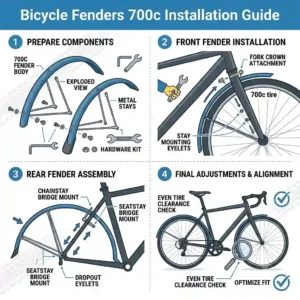
Getting a set of bicycle fenders 700c onto your bike is only half the battle; aligning them so they don’t rub or rattle is where the true mechanics shine. Amazon product descriptions make it sound like a five-minute job, but any seasoned shop tech will tell you that a proper installation takes at least an hour.
The “Fender Line” Setup:
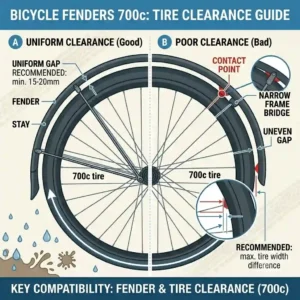
First, do not tighten anything down until the entire fender is loosely attached. Your goal is a perfect “fender line”—a consistent 10mm to 15mm gap between the tire and the inside of the mudguard all the way around. If the gap is too tight near the bottom bracket but loose near the brake, water will pool and drip onto your feet.
Dealing with Disc Brakes:
Modern disc calipers often get in the way of the front fender stays. Instead of bending the metal stay (which weakens it), use a nylon spacer and a longer M5 bolt to push the mounting point outward, clearing the brake caliper entirely.
Year One Maintenance:
After your first 50 miles, the vibrations of the road will likely loosen the initial hardware. Take a 3mm hex wrench and an 8mm box wrench and snug every single nut. Furthermore, if you bought plastic or chromoplastic fenders, applying a light coat of automotive wax to the underside every 6 months prevents wet leaves and mud from sticking, keeping rotational weight down.
Real-World Scenarios: Matching the Gear to the Rider
It is incredibly common for cyclists to buy the highest-rated product only to find it completely unsuited to their lifestyle. Let’s break down three specific user profiles and match them to the correct gear.
The Four-Season Daily Commuter:
If you are riding 10 miles each way in Seattle rain, the Portland Design Works Full Metal is your only true option. You need structural integrity that won’t fail when navigating icy potholes. The rigid aluminum and massive mudflaps ensure your work slacks stay immaculate. You are willing to sacrifice ease-of-installation for absolute permanence.
The Weekend Gravel Enthusiast:
You ride fire roads and mixed-terrain trails. Here, an ultra-rigid metal fender is actually a liability; if a rock gets sucked into the tread, it will bend the aluminum. You need the SKS Bluemels Matt. The chromoplastic will flex, and the ASR safety release will pop out, saving you from a nasty crash. Plus, they handle the width of a 700x40c tire perfectly.
The High-Performance Training Cyclist:
You ride a $5,000 carbon fiber road bike with aerodynamic tubing and zero mounting holes. You cannot run full-coverage guards. Your best bet is the SKS Raceblade Pro XL. You can strap them on for a damp Sunday base-mile ride, and strip them off in seconds when the sun comes out, maintaining the aggressive geometry and look of your race machine.
Problem → Solution: Banishing Toe Overlap and Rattles
Even the best bicycle fenders 700c can introduce annoying quirks to your ride. Here is how we solve the three most common complaints I see in the workshop.
Problem 1: Toe Overlap
When turning sharply at low speeds, the toe of your shoe strikes the front fender.
Solution: This is a geometry issue exacerbated by the mudguard. While you can’t lengthen your bike frame, you can switch to a fender with a slightly shorter rearward drop, or gently heat-mold the bottom edge of a plastic fender (like the SKS Bluemels) slightly inward using a heat gun.
Problem 2: The Harmonic Rattle
Every time you ride over chip-seal pavement, the bike sounds like a tin can full of marbles.
Solution: The rattling almost always occurs where the metal stay intersects with the plastic fender body, or at the brake bridge. Go to a hardware store and buy small rubber O-rings or leather washers. Place these between every metal-to-metal and metal-to-plastic mounting point. It isolates the vibration instantly.
Problem 3: The Rear Fender Droops Over Time
After a few months, the rear mudguard begins sagging close to the tire.
Solution: The single mounting bolt at the brake bridge is slipping under gravity. Remove the bolt, apply a drop of blue Loctite to the threads, and place a serrated lock-washer against the frame. This grips the metal and prevents the downward slide.
How to Choose Your Next Fender Set (Expert Criteria)
When selecting bicycle fenders 700c, looking at the price tag is the absolute worst way to make a decision. You must evaluate the product through a mechanical lens.
-
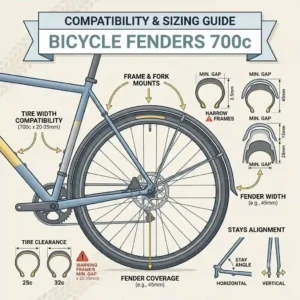
Calculate True Clearance: Measure the gap between your inflated tire and the brake bridge/fork crown using an Allen key. If an 8mm wrench cannot pass through freely, you cannot run traditional full-coverage guards. You must pivot to clip-on options like the Crud Roadracer MK3.
-
Width Matters More Than Material: The golden rule of fender sizing is that the guard must be at least 8mm to 10mm wider than your tire. If you run a 700x32c tire, you need a 40mm to 45mm fender. If the guard is flush with the tire side, water will still escape and spray your shins.
-
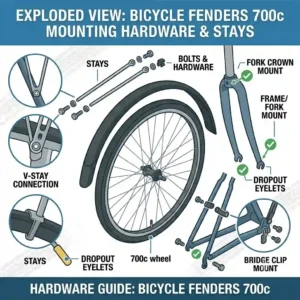
Assess Your Frame Mounts: Check your dropouts. Do you have threaded eyelets? What about a hole in the seat stay bridge? If your bike lacks these, you are restricted to strap-on models. Do not attempt to drill into your frame or use zip-ties as a permanent structural solution.
-
Evaluate the Breakaway Mechanism: For front wheels, a safety release tab is non-negotiable in my shop. Debris caught in the front wheel can cause an instant endo. Look for systems like SKS’s ASR that disconnect under pressure.
Common Mistakes When Buying 700c Fenders
In a decade of retail cycling experience, I have seen every mistake in the book. The most prevalent error is buying strictly for aesthetics rather than tire profile. A rider will purchase sleek, 30mm wide aluminum mudguards because they look fast, only to realize they are running 35mm tires. The result is a fender that acts like a water canon, shooting a pressurized stream of dirty water directly at the rider’s face.
Another massive pitfall is ignoring the drivetrain side. Many riders buy “ass-savers” or short rear guards that only protect their back. While keeping your jacket clean is nice, the primary financial benefit of a full-coverage fender is protecting your chain, cassette, and front derailleur from corrosive road salt and grit. A proper rear fender should extend well past the axle line downwards toward the ground to shield the drivetrain.
Lastly, undertightening the hardware. Because installing these components requires awkward angles, people often hand-tighten the nuts and call it a day. Road vibrations are relentless. If you don’t use a proper torque wrench or at least a firm lock-nut engagement, you will lose a bolt on your first rough descent.
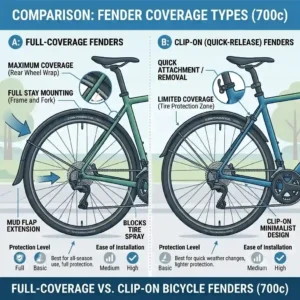
Full-Coverage vs. Clip-On Fenders
The debate between full-coverage and clip-on styles isn’t just about preference; it’s about physics and commitment.
Full-Coverage Fenders (like the Planet Bike Cascadia) wrap roughly 180 degrees around the rear wheel and 120 degrees around the front. They capture the water at the source. The deep analysis here is aerodynamics and cleanliness: a full wrap actually smooths the turbulent air coming off the tire tread, and more importantly, it shields the cyclist behind you. If you ride in a group during the winter, full-coverage is mandatory. The downside? They are heavy, cumbersome to remove, and can trap mud.
Clip-On Fenders (like the SKS Raceblade) only cover the top arc of the wheel. They are phenomenally lightweight and can be removed in seconds. However, the performance gap is significant. Because they usually don’t extend past the brake caliper, water still sprays out the front of the fork (blowing back into your face) and drops onto your bottom bracket. They are a brilliant compromise for unpredictable weather, but they are absolutely a compromise.
What to Expect: Real-World Performance
Let’s translate the marketing hype into everyday reality. When a brand claims their bicycle fenders 700c offer “100% waterproof protection,” they are banking on perfect conditions.
In the real world, if you hit a deep puddle at 18 mph, no fender will keep your shoes completely dry. The water displacement at that speed causes lateral spray that escapes the side of the guard. However, what you should expect is the complete elimination of the “rooster tail” up your back, and a dry torso.
Furthermore, you must expect a change in your bike’s handling. Full-coverage metal fenders add roughly 500 to 700 grams of static weight, mostly at the extremities of the bike. This slightly dampens the snappy acceleration of a road bike. Additionally, in heavy crosswinds, solid aluminum blades act like small sails, making the front wheel feel slightly twitchy. This is a normal aerodynamic trade-off for staying dry.
Long-Term Cost & Maintenance of Cycling Rain Gear
The Total Cost of Ownership (TCO) for a set of high-quality mudguards is shockingly favorable. Consider this: a mid-tier 11-speed cassette and chain replacement costs around $120. Riding through a wet, gritty winter without guards will easily destroy a drivetrain in a single season due to abrasive paste wearing down the steel teeth.
Investing $70 in a set of Planet Bike Cascadias effectively doubles the lifespan of your drivetrain components. It pays for itself in less than eight months.
Maintenance, however, is required. Every 6 months, you should perform the following cycle:
-
Hardware Check: Inspect every eyelet bolt. Replace any showing signs of rust.
-
Mudflap Assessment: Rubber mudflaps stiffen and crack from UV exposure. Treat them with a rubber conditioner or replace them if torn.
-
Internal Cleaning: A thick layer of dried mud on the underside can add unexpected weight and hold moisture against the metal. Scrub the interior with warm soapy water and a stiff nylon brush.
Features That Actually Matter (And Those That Don’t)
Marketing departments love to invent acronyms, but as a mechanic, I filter features based on utility.
Features That Matter:
-
Safety Release Front Stays: This is life or death. If a branch catches your front wheel, a breakaway stay allows the fender to crumple safely. Without it, the wheel locks instantly, sending you flying.
-
Pre-Installed Mudflaps: A fender without a mudflap is only doing 70% of its job. Long flaps keep the spray off the rider behind you and off your own feet.
-
Stainless Steel Hardware: Zinc-plated bolts will rust solid within two winters. Always insist on stainless steel or brass.
Features That Don’t Matter:
-
Aerodynamic Dimples: Some plastic guards feature golf-ball-like dimples claiming aero benefits. At commuting speeds (12-18 mph), the drag reduction is statistically zero.
-
Integrated Lighting: Fenders with built-in LED lights look great in the showroom, but when the proprietary wiring snaps or the battery casing corrodes from tire spray, you are left with dead weight. Standalone, seat-post-mounted lights are vastly superior.
For an in-depth understanding of how bicycle geometry impacts accessory fitting, I highly recommend reading the Bicycle Frame Geometry overview on Wikipedia or consulting safety guidelines from the League of American Bicyclists.
✨ Don’t Miss These Exclusive Deals!
🔍 Take your bike to the next level with these carefully selected products. Click on any highlighted item to check current pricing and availability. These tools will help you create a reliable, all-weather machine you will love!
Conclusion
Navigating the market for bicycle fenders 700c in 2026 requires looking past sleek marketing photos and focusing strictly on clearance, material integrity, and mounting hardware. Whether you opt for the bombproof rigidity of the Portland Design Works Full Metal for your daily commute or the ingenious quick-release system of the SKS Raceblade Pro XL for your weekend road rides, the right choice fundamentally transforms wet-weather cycling from a punishing chore into an enjoyable extension of your riding season.
Remember that patience during the initial installation is paramount. A perfectly aligned “fender line” will reward you with thousands of miles of silent, dry riding, protecting both your clothing and your expensive drivetrain components from premature wear.
FAQs
❓ What size fenders do I need for 700c x 32 tires?
✅ You should look for bicycle fenders 700c that are roughly 10mm wider than your tire. For a 32c tire, a fender width of 42mm to 45mm is ideal to capture water spray efficiently without rubbing against the frame…
❓ Can I put 700c fenders on a 29er mountain bike?
✅ Generally, no. While a 700c and 29-inch rim share the same bead seat diameter (622mm), 29er tires are significantly wider and taller. 700c fenders lack the internal clearance and width required for mountain bike treads…
❓ Do bicycle fenders slow you down?
✅ Aerodynamically, well-designed, close-fitting fenders can actually reduce turbulence and make a bike slightly more aero. However, the added weight (400-700g) will marginally slow your acceleration and climbing speed on steep gradients…
❓ How do I stop my bicycle fenders from rattling?
✅ Rattle is caused by metal-on-metal or loose plastic vibrations. Ensure all bolts are torqued correctly, and insert small rubber O-rings or leather washers between the mounting hardware and the frame to absorb road chatter…
❓ Are aluminum or plastic bike fenders better?
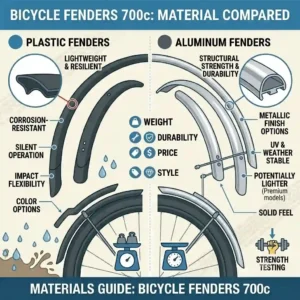
✅ Aluminum offers superior rigidity, absolute silence on rough roads, and a classic aesthetic. Plastic (or chromoplastic) is much lighter, cheaper, and can flex upon impact without denting. Choose aluminum for durability, and plastic for tight budgets…
Recommended for You
- 650b Tires: The Ultimate Guide to Unlocking Your Bike’s Potential 🚀
- 7 Best carbon fiber fenders for 2026: Ultimate Guide & Review
- Rear fenders Guide: 7 Best Choices for Ultimate 2026 Protection
Disclaimer: This article contains affiliate links. As an Amazon Associate, I earn from qualifying purchases. If you purchase products through these links, we may earn a small commission at no additional cost to you.
✨ Found this helpful? Share it with your friends! 💬🤗
[addtoany]
