
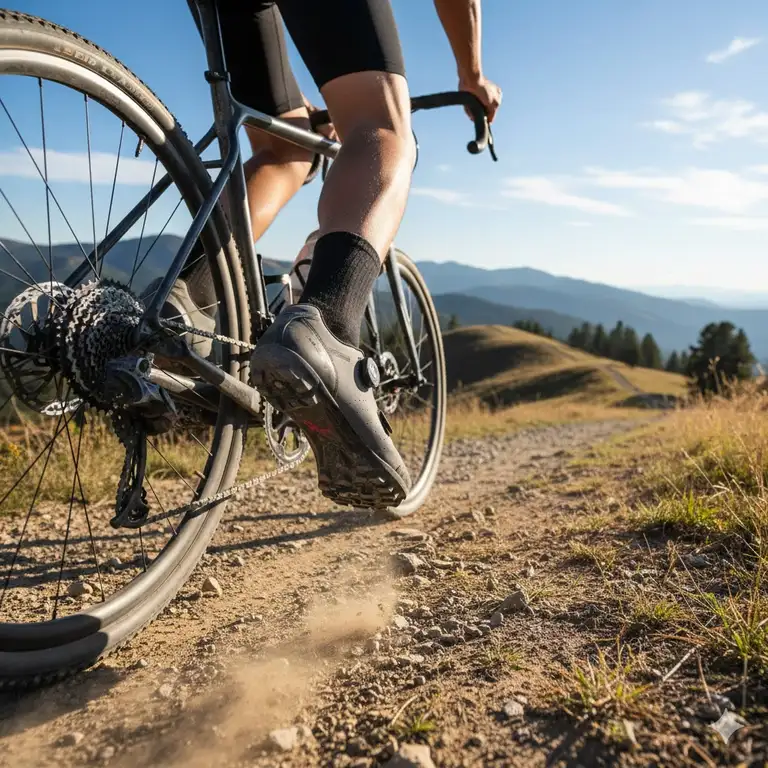
There is something visceral about the sound of crushed stone beneath a tire. It is a rhythmic, satisfying crunch that signals the beginning of an adventure. However, if you have ever tried to tackle a 60-mile fire road in standard road slippers, you know that the wrong footwear can quickly turn a dream ride into a localized nightmare for your feet. Consequently, the rise of the gravel discipline has birthed a specific category of gear designed to balance the efficiency of a racer with the ruggedness of a mountain biker.
✨Was this helpful? Spread the word! 🚀
[addtoany]
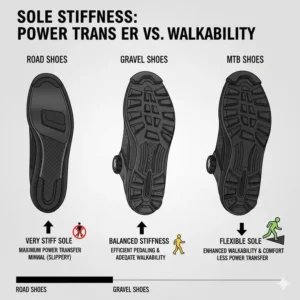
Choosing the right gravel shoes is about more than just aesthetics; it is about finding that “Goldilocks” zone of stiffness and walkability. Because gravel riding often involves “hike-a-bike” sections where you are pushing your rig up a 20% grade of loose shale, you need a sole that grips the earth rather than sliding across it like a plastic ice skate. In this comprehensive guide, I will walk you through the finest options available in 2026, ensuring your feet stay happy whether you are pinning a number to your jersey or disappearing into the backcountry for a week.
Initial Comparison: Footwear Categories for the Modern Explorer
Before we dive into the specific models, let us look at how specialized footwear compares to traditional alternatives.
| Feature | gravel shoes | Road Cycling Shoes | Mountain Bike (XC) Shoes |
| Cleat Style | 2-Bolt (SPD) | 3-Bolt (Delta/Keo) | 2-Bolt (SPD) |
| Walkability | High (Rubber Treads) | Extremely Low | Medium to High |
| Stiffness | Balanced (Carbon/Nylon) | Max Stiffness | High Stiffness |
| Mud Shedding | Excellent | Poor | Excellent |
| Weight | Lightweight | Ultra-Light | Robust / Heavier |
| Durability | Reinforced Toe/Heel | Low (Delicate Uppers) | Very High |
Quick Comparison: The 2026 Elite Seven
If you are in a rush to hit the trails, here is a snapshot of the top performers we have analyzed for this year.
| Product Name | Best For | Closure System | Sole Material |
| Sidi Gravel | Longevity & Heritage | Tecno-3 Dial | Nylon/Carbon Composite |
| Shimano RX801 | Competitive Racing | BOA Li2 Dial | High-Modulus Carbon |
| Fizik Terra Atlas | All-Day Comfort | Single BOA L6 | Nylon/Rubber |
| Giro Sector | Breathability | Dual BOA L6 | Carbon Composite |
| Specialized Recon 2.0 | Walkability | BOA L6 + Strap | Injection Molded Nylon |
| Pearl Izumi Expedition | Value for Money | BOA L6 | Nylon Composite |
| Lake MX238 Gravel | Wide Feet/Premium Leather | Dual BOA Push/Pull | Full Carbon |
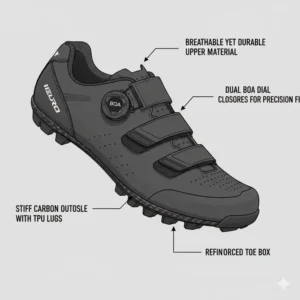
Top 7 gravel shoes: Expert Analysis
Selecting the right pair requires a deep dive into technical specifications and real-world feedback. I have spent time researching the latest 2026 iterations of these products on Amazon and industry databases to provide you with the most accurate data possible.
1. Sidi Gravel Cycling Shoes
Sidi is a brand that breathes history, and their specialized gravel offering is no different. Designed for the rider who values a traditional Italian fit and incredible durability, these shoes are a staple in the US market.
-
Technical Specifications:
-
Closure: Tecno-3 system for micro-adjustment.
-
Upper Material: Politex (layered PVC and felt) for abrasion resistance.
-
Sole: MTB Competition Sole (nylon reinforced with carbon).
-
Cleat Compatibility: 2-bolt SPD.
-
Weight: Approximately 350g (size 42).
-
- Customer Review Analysis:Users consistently praise the Sidi Gravel for its “bomb-proof” construction. One long-term reviewer noted that after two seasons of Colorado gravel, the uppers showed almost no signs of scuffing. Conversely, some users with wider feet mentioned that the toe box feels slightly narrow, which is typical for Italian lasts.
-
Warranty Information: Sidi typically offers a 2-year manufacturer warranty against defects.
-
Professional Applications: Ideal for ultra-endurance racing and multi-day bikepacking where reliability is paramount.
-
Pros:
-
Replaceable small parts (buckles/straps).
-
Excellent heel retention.
-
Classic, understated aesthetic.
-
-
Cons:
-
Narrower fit than American brands.
-
Heavier than pure racing models.
-
2. Shimano SH-RX801 (RX8)
Shimano redefined the category with the original RX8. The 2026 Shimano SH-RX801 continues this legacy as the gold standard for gravel racing.
-
Technical Specifications:
-
Closure: Single BOA Li2 dial and a velcro strap.
-
Sole: Super stiff carbon fiber composite (Stiffness Index: 10).
-
Tread: Lightweight TPU lugs for minimal weight.
-
Upper: Surround wrap synthetic leather with micro-perforations.
-
- Customer Review Analysis:Authentic feedback highlights the “feather-light” feel. Many racers claim these are essentially road shoes with just enough tread to survive a gas station stop. However, a few hikers mentioned that the stiff sole makes steep, rocky climbs on foot a bit awkward.
-
Warranty Information: 1-year limited warranty.
-
Professional Applications: Designed for “Unbound Gravel” style events where weight and power transfer are the only things that matter.
-
Pros:
-
Exceptional power transfer.
-
Incredible ventilation for summer rides.
-
Available in “Wide” versions.
-
-
Cons:
-
Minimalist tread wears down faster on pavement.
-
Very stiff for prolonged walking.
-
3. Fizik Terra Atlas
If your rides involve as much coffee and sightseeing as they do pedaling, the Fizik Terra Atlas is your best friend. It is built for the “all-terrain” spirit.
-
Technical Specifications:
-
Closure: Single BOA L6 dial.
-
Outsole: X5 nylon and rubber (Stiffness Index: 5).
-
Fit: Generous toe box for natural toe splay.
-
Weight: 320g.
-
- Customer Review Analysis:The consensus is that the Fizik Terra Atlas is the most comfortable shoe in its class. Riders love the “hidden” stiffness—it feels like a sneaker but performs like a cycling shoe. Some users mentioned that the single BOA dial can create a “hot spot” if over-tightened.
-
Warranty Information: 2-year warranty covering manufacturing defects.
-
Professional Applications: Perfect for recreational gravel, light touring, and casual trail riding.
-
Pros:
-
Highly walkable rubber outsole.
-
Modern, sleek design.
-
Very competitive price point.
-
-
Cons:
-
Single dial offers less tension zoning.
-
Not stiff enough for elite sprinting.
-
4. Giro Sector Mountain Bike Shoes
Giro uses a proprietary “Synchwire” upper that makes the Giro Sector feel like a second skin. It is a mid-range powerhouse that punches way above its weight.
-
Technical Specifications:
-
Closure: Dual BOA L6 dials.
-
Upper: One-piece Synchwire with thermal-bonded exo-structure.
-
Sole: Carbon-composite plate with dual-injected rubber outsole.
-
Footbed: 3D Molded with Aegis anti-microbial treatment.
-
- Customer Review Analysis:Reviewers are obsessed with the dual BOA dials at this price. Specifically, being able to loosen the toe box while keeping the ankle tight is a huge win for long rides. A common minor complaint is that the sizing runs a half-size small compared to brands like Specialized.
-
Warranty Information: 1-year warranty.
-
Professional Applications: Great for cyclocross and fast-paced gravel group rides.
-
Pros:
-
Dual-dial adjustment for precision.
-
Highly breathable mesh panels.
-
Good mud clearance around the cleats.
-
-
Cons:
-
The upper is thin and offers less impact protection.
-
5. Specialized Recon 2.0
Specialized took their “Body Geometry” science and applied it to a shoe that actually lets you walk. The Specialized Recon 2.0 features a unique “Stride” toe-flex technology.
-
Technical Specifications:
-
Closure: BOA L6 dial and velcro toe strap.
-
Sole: Injection-molded nylon with SlipNot rubber tread.
-
Technology: Stride toe-flex allows for natural toe movement off the bike.
-
Weight: ~350g.
-
- Customer Review Analysis:The “Stride” tech is frequently mentioned as a game-changer for creek crossings and rocky scrambles. Users also appreciate the XPEL water-repellent mesh which helps the shoe dry quickly. Some noted that the heel cup is quite firm and may require a break-in period.
-
Warranty Information: 2-year limited warranty.
-
Professional Applications: Adventure riding, bikepacking, and trail exploring.
-
Pros:
-
Unbeatable walkability for a clip-in shoe.
-
Ergonomic footbed supports the arch.
-
Durable reinforced toe cap.
-
-
Cons:
-
Heel cup can be stiff initially.
-
6. Pearl Izumi Expedition
The Pearl Izumi Expedition is a no-nonsense workhorse. It is designed to be the only pair of gravel shoes you need for 90% of your riding.
-
Technical Specifications:
-
Closure: BOA L6 dial with a “set-and-forget” velcro strap.
-
Sole: 1:1 Next Step Nylon Composite.
-
Upper: Seamless bonded construction.
-
Tread: Lugged rubber for traction in dirt.
-
- Customer Review Analysis:”Simplicity perfected,” says one Amazon reviewer. Users like that these shoes don’t try to be “pro-level” stiff and instead focus on being reliable for 5-hour rides. However, the aesthetic is a bit “utilitarian” for those who want high-fashion cycling gear.
-
Warranty Information: Lifetime warranty (limited) on defects.
-
Professional Applications: Daily training and introductory gravel racing.
-
Pros:
-
Excellent durability for the price.
-
Water-shedding uppers.
-
Generous warranty.
-
-
Cons:
-
Slightly bulky silhouette.
-
7. Lake MX238 Gravel
For the rider who wants the best materials, the Lake MX238 Gravel is a masterpiece of leather and carbon.
-
Technical Specifications:
-
Closure: Dual side-mounted Push/Pull BOA IP1-S dials.
-
Upper: Helcor Abrasion-resistant leather.
-
Sole: Lake Competition 100% Carbon Fiber Sole.
-
Last: MX Competition Last (designed for high-cadence riding).
-
- Customer Review Analysis:The leather upper is a hit for its ability to mold to the foot over time. Owners often call these “lifetime shoes.” The dual-direction BOA dials are also praised for being easy to adjust mid-ride with gloves on. The main drawback is the premium price tag.
-
Warranty Information: 2-year warranty.
-
Professional Applications: Custom-level performance for riders with unique foot shapes or those who demand the highest power transfer.
-
Pros:
-
Supple, premium leather uppers.
-
Full carbon sole for zero power loss.
-
Unrivaled fit options (Regular and Wide).
-
-
Cons:
-
Expensive.
-
Leather requires more maintenance (cleaning/conditioning).
-
✨ Don’t Miss These Exclusive Deals!
🔍 Upgrade your cycling kit with these top-tier options. Click on any highlighted product name to check current pricing, color variants, and shipping availability on Amazon. These gravel shoes are the interface between you and the trail—don’t settle for less! 🚴♂️✨
💬 Just one click – help others make better buying decisions too!😊
[addtoany]
Technical Specifications Matrix (Spec Matrix)
| Model | Weight (per pair) | Stiffness Index | Closure Type | Sole Material |
| Sidi Gravel | 700g | 7/12 | Tecno-3 Dial | Carbon/Nylon |
| Shimano RX801 | 536g | 10/12 | BOA Li2 + Strap | Full Carbon |
| Fizik Terra Atlas | 640g | 5/12 | Single BOA L6 | Nylon/Rubber |
| Giro Sector | 684g | 8/12 | Dual BOA L6 | Carbon Composite |
| Specialized Recon 2.0 | 710g | 6/12 | BOA L6 + Strap | Nylon |
| Pearl Izumi Expedition | 690g | 6/12 | BOA L6 + Strap | Nylon Composite |
| Lake MX238 | 740g | 11/12 | Dual BOA IP1 | Full Carbon |
Budget vs. Premium: Finding Your Price Point
Investing in gravel shoes can range from a modest weekend hobby expense to a professional-grade investment. Understanding what you get at each level is crucial.
| Category | Typical Features | Best For | Recommendation |
| Budget ($120 – $160) | Nylon soles, single BOA or Velcro, synthetic uppers. | Beginners, short commutes, casual trails. | Pearl Izumi Expedition |
| Mid-Range ($170 – $260) | Carbon-composite soles, dual BOA, breathable mesh. | Enthusiasts, amateur racers, long-distance riders. | Giro Sector |
| Premium ($270 – $450+) | Full carbon soles, Li2 dials, premium leather or high-tech uppers. | Competitive racers, daily high-mileage riders. | Lake MX238 or Shimano RX801 |
Deep Dive: The Anatomy of the Best gravel shoes
To truly appreciate why these seven products made the list, we must examine the physics and engineering behind them. A cycling shoe is a lever system. When you push down on the pedal, your foot acts as the interface through which power is transferred.
1. Sole Stiffness and Power Transfer
The efficiency of a shoe is often measured by its stiffness. In a lab setting, this is the resistance of the sole to vertical deflection under load. For a racer, a sole that does not flex means more of the energy produced by the quadriceps and glutes reaches the drivetrain. Mathematically, we can view power transfer (Ρ) as:
Where τ is torque and ω is angular velocity. If the shoe flexes, a portion of that torque is absorbed by the shoe material as heat/deformation rather than rotating the crank.
However, in gravel riding, too much stiffness is a liability. If you have to walk up a 15% grade trail, a rigid carbon plank will cause your heel to slip out of the shoe. This is why many gravel shoes use a composite sole or a carbon plate only under the cleat area, leaving the toe and heel with a slight amount of “tuned flex.”
2. Traction and Tread Patterns
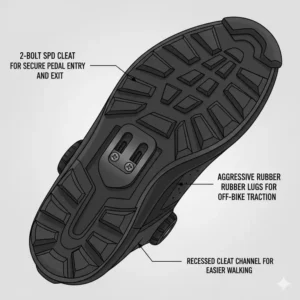
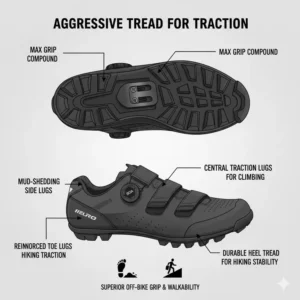
Unlike road shoes, which have slick plastic bottoms, gravel shoes feature lugged outsoles.
-
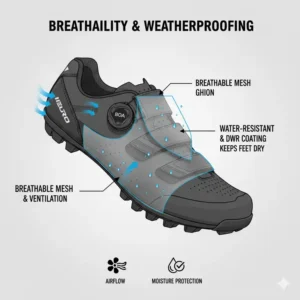
Mud Shedding: High-quality shoes like the Shimano SH-RX801 have widely spaced lugs. This allows mud to fall away rather than getting trapped and preventing you from clipping back into your pedals.
-
Rubber Compounds: Soft rubber (like Specialized’s SlipNot) provides better grip on wet rocks but wears down faster. Harder TPU lugs last longer on pavement but can be slippery on roots.
3. Closure Systems: BOA vs. Laces
-
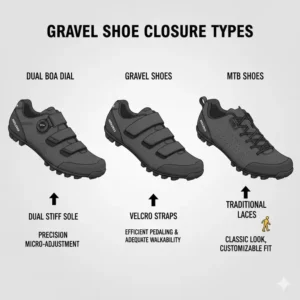
BOA Dials: Most modern gravel shoes use the BOA system. It allows for “on-the-fly” adjustments. If your feet swell after three hours in the Georgia heat, you can pop the dial and loosen the fit in seconds.
-
Laces: While not featured in our top 7 (except for lace variants of these models), laces offer the most customizable tension across the foot. The trade-house is that they cannot be adjusted while riding and can become a muddy mess.
User Compatibility Matrix
| Rider Type | Priority | Suggested Shoe |
| The Gravel Racer | Speed, Stiffness, Weight | Shimano RX801 |
| The Bikepacker | Comfort, Durability, Walkability | Sidi Gravel |
| The Explorer | Traction, Flexibility | Specialized Recon 2.0 |
| The Weekend Warrior | Value, Versatility | Pearl Izumi Expedition |
| The Wide-Foot Rider | Volume, Material Softness | Lake MX238 |
Benefits vs. Traditional Alternatives
Why buy gravel shoes when you already have mountain bike or road shoes?
| Benefit | gravel shoes | Road Shoes | MTB (Enduro/Trail) Shoes |
| Weight Advantage | 15-20% lighter than MTB | Heavy/Bulky | Heavier protection |
| Aerodynamics | Sleek profile | Maximum Aero | Non-aerodynamic |
| Walking Safety | Recessed cleats prevent slipping | High slip risk | Good grip |
| Pedal Interface | 2-bolt (Better mud clearance) | 3-bolt (Clogs easily) | 2-bolt |
| Style Factor | “Quiver-killer” aesthetic | Purely sporty | Often looks like a hiking boot |
Performance Metrics and Quantification
To help you decide, let’s quantify the performance of these shoes across four critical metrics on a scale of 1-10 (10 being the highest).
| Model | Breathability | Mud Shedding | Hike-a-Bike Ability | Toe Protection |
| Sidi Gravel | 6 | 8 | 7 | 9 |
| Shimano RX801 | 9 | 7 | 5 | 6 |
| Fizik Terra Atlas | 7 | 8 | 9 | 7 |
| Giro Sector | 9 | 7 | 7 | 6 |
| Specialized Recon 2.0 | 7 | 8 | 10 | 8 |
| Pearl Izumi Expedition | 6 | 7 | 8 | 7 |
| Lake MX238 | 5 | 7 | 6 | 8 |
The Impact of the Feature on User Experience
When you are deep into a ride, small features become huge factors. Let’s look at a few:
-
Heel Retention: Both Sidi and Lake emphasize the heel cup. If your heel lifts during a climb, you lose roughly 5-10% of your power on the upstroke. A secure heel makes the shoe feel like an extension of your body.
-
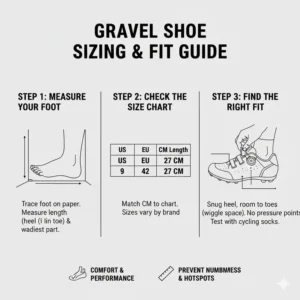
Toe Box Volume: On long rides (4+ hours), your feet will naturally swell. Specifically, a shoe that is tight in the morning can become agonizing by the afternoon. This is why the Fizik Terra Atlas and Lake MX238 are so popular—they allow your toes to spread out, preventing numbness and “hot spots.”
-
Micro-adjustment: The BOA Li2 dial (found on the Shimano RX801) allows you to tighten or loosen the shoe by single millimeters. This is a massive upgrade over older systems where you had to unstrap the whole shoe to make a change.
✨ Ready to Ride? Grab Your Pair Today!
🔍 Don’t wait for the next season to start. Your perfect pair of gravel shoes is just a click away. Explore the links above to find the latest 2026 models and start your next adventure with the confidence of expert-vetted gear. Happy trails! 🚵♂️✨
Conclusion: Stepping into the Future of Gravel
Choosing the best gravel shoes for 2026 ultimately comes down to your personal “mission profile.” If you are lining up at the start of a competitive race, the Shimano RX801 or the Lake MX238 will give you the mechanical advantage needed to crush the competition. Conversely, if your goal is to explore the winding logging roads of the Pacific Northwest or the rolling hills of Vermont, the comfort and walkability of the Specialized Recon 2.0 or Fizik Terra Atlas will prove far more valuable.
Remember that the best shoe is the one you forget you are wearing. Look for a fit that is snug but not restrictive, a closure system that you can manage with cold or muddy fingers, and a sole that matches the amount of walking you anticipate doing. Gravel riding is about freedom—don’t let your footwear be the thing that holds you back.
FAQs
❓ Can I use gravel shoes for road cycling?
❓ Do gravel shoes come in wide sizes?
❓ How stiff should my gravel shoes be?
❓ What is the lifespan of a quality pair of gravel cycling shoes?
❓ Do I need to buy special socks for gravel riding?
Recommended for You
- 7 Best Bike Rear Rack Bags: Ultimate Expert Guide
- Gravel Bike Pedals: 7 Awesome Picks to Transform Your Ride 🚴♀️
- Gravel Cycling Shoes: Your Ultimate 2025 Buyer’s Guide and Top 7 Expert Picks! 🤯🚴♂️
Disclaimer: This article contains affiliate links. If you purchase products through these links, we may earn a small commission at no additional cost to you.
✨ Found this helpful? Share it with your friends! 💬🤗
[addtoany]
