
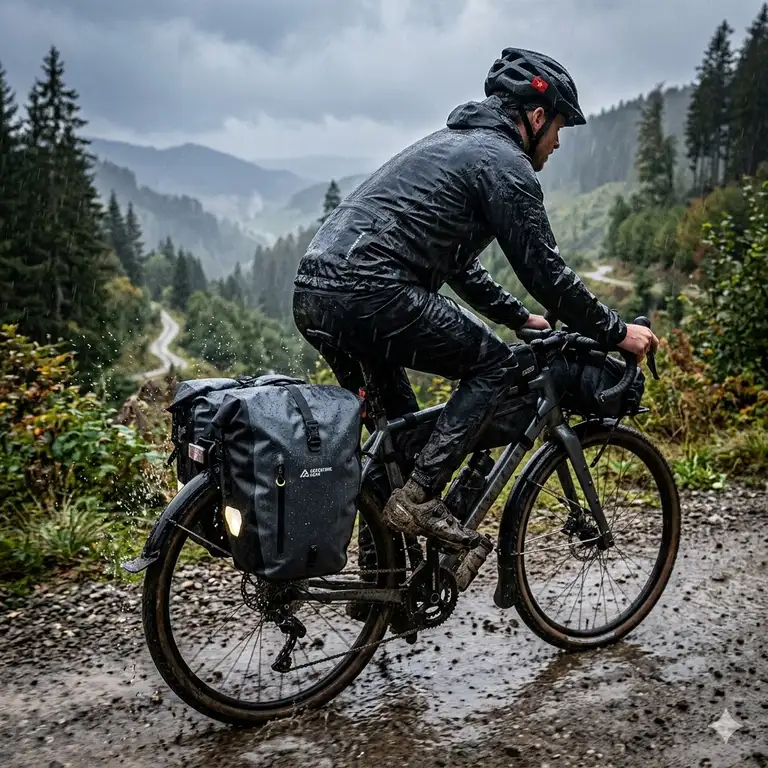
What is a waterproof bike bag? Simply put, a waterproof bike bag is a specialized storage container designed to mount securely to a bicycle—whether on the handlebars, frame, or rear rack—while providing an impenetrable barrier against rain, road spray, and moisture. Unlike “water-resistant” gear, a true waterproof model typically features heat-welded seams and roll-top closures, ensuring your electronics and spare clothes stay dry even during a sustained Pacific Northwest downpour or an accidental splash through a deep puddle…
Whether you are a seasoned bike-packer or a daily commuter trying to save your laptop from a sudden spring shower, the evolution of gear in 2026 has made staying dry easier than ever. We have moved past the days of heavy, rubbery sacks that smell like a tire factory. Today’s options are lightweight, stylish, and incredibly durable. In this guide, I will walk you through the top-performing options on the market, interpreting those confusing spec sheets into real-world benefits so you can spend less time worrying about your gear and more time enjoying the ride.
Quick Comparison: Top 2026 Waterproof Storage Solutions
| Product Name | Primary Material | Mounting System | Best For | Price Range |
| Ortlieb Back-Roller | PVC-coated Polyester | QL2.1 Auto-lock | Long-distance Touring | around $185-$210 |
| RockBros Pannier | 840D Nylon + TPU | Adjustable Hooks | Budget Commuting | around $50-$70 |
| Two Wheel Gear Lite | 600D Recycled Poly | Backpack Conversion | Office Professionals | around $155-$180 |
Looking at the comparison above, the Ortlieb Back-Roller Classic remains the benchmark for those prioritizing absolute durability and a secure “click-and-go” system. However, if you are a casual rider who only faces occasional rain, the RockBros Waterproof Pannier offers a surprisingly high level of protection for nearly a third of the price. Professional commuters should look closely at the Two Wheel Gear Pannier Backpack Lite, which sacrifices a bit of raw volume for the sake of office-ready aesthetics and ergonomics.
💬 Just one click — help others make better buying decisions too! 😊
[addtoany]
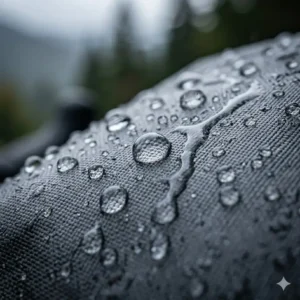
Top 5 waterproof bike bag Models: Expert Analysis
1. The Undisputed Legend: Ortlieb Back-Roller Classic
The Ortlieb Back-Roller Classic continues to dominate the touring world in 2026 with its legendary hermetic seal. It features the QL2.1 mounting system, which allows you to attach or remove the bag from your rack with a single-handed lift of the handle.
In my experience, the “Classic” designation isn’t just marketing; it’s a testament to the PVC-coated polyester that can survive years of UV exposure and gravel abrasions without peeling. While some find the roll-top closure slightly slower than a zipper, it is the only way to guarantee a 100% seal against high-pressure road spray. What most buyers overlook is the internal pocket—it’s basic, but it keeps your keys from scratching your tablet. This is the “buy it once, use it for twenty years” bag.
✅ Pros:
-
Indestructible welded construction.
-
Tool-free mounting adjustment.
-
Highly visible 3M Scotchlite reflectors.
❌ Cons:
-
Premium price point.
-
Minimal internal organization.
Price Range: around $185-$210 (per pair)
Value Verdict: The gold standard for serious travelers who cannot afford gear failure in the middle of nowhere.
2. The Budget Powerhouse: RockBros Waterproof Pannier
If you want 90% of the performance of high-end bags at a fraction of the cost, the RockBros Waterproof Pannier is the winner. Utilizing 840D Nylon with a TPU film, this bag feels surprisingly rugged.
The 25L capacity is perfect for grocery runs or a change of clothes for the gym. The mounting hooks are adjustable, though they lack the “locking” security of the Ortlieb system—something to keep in mind if you frequently ride over bumpy cobblestones. I’ve noticed that while the material is fully waterproof, the external mesh pocket is not, so don’t put your phone there during a storm! This is the ideal entry point for someone testing the waters of bike commuting.
✅ Pros:
-
Incredible price-to-performance ratio.
-
Thick, tear-resistant TPU coating.
-
Easy to wipe clean after muddy rides.
❌ Cons:
-
Hardware feels slightly “plasticky.”
-
Mounting clips can rattle on rough terrain.
Price Range: around $50-$70
Value Verdict: Perfect for students and weekend warriors who need reliable rain protection without the “pro” price tag.
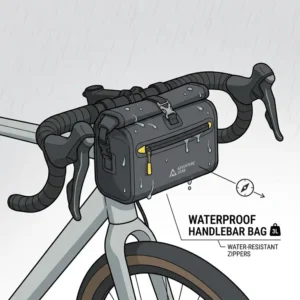
3. The Hybrid Specialist: Two Wheel Gear Pannier Backpack Lite
The Two Wheel Gear Pannier Backpack Lite solves the age-old problem of the “awkward walk” from the bike rack to the office. It features a hidden mounting system that transforms into a comfortable backpack in under 10 seconds.
With a dedicated 15-inch padded laptop sleeve and organized internal mesh pockets, it treats your tech with more respect than a standard roll-top sack. The material is a 600D recycled polyester with a waterproof coating, though I always recommend using the included high-viz rain cover for peace of mind during heavy deluges. In my opinion, this bag is for the rider who values style and organizational flow over raw storage volume.
✅ Pros:
-
Seamless transition from bike to back.
-
Superior internal organization for electronics.
-
Sustainable, recycled materials.
❌ Cons:
-
Smaller capacity than traditional panniers.
-
Heavier due to the backpack straps.
Price Range: around $155-$180
Value Verdict: The ultimate choice for the urban professional who needs to look polished upon arrival.
4. The Versatile Adventure Companion: RhinoWalk Bike Bag
The RhinoWalk Bike Bag is a 3-in-1 modular system that appeals to the “do-it-all” cyclist. It functions as a single pannier, a shoulder bag, or even a backpack depending on how you configure the straps.
The heat-pressed seams are impressively executed, providing a clean look that doesn’t scream “industrial equipment.” What’s particularly clever is the anti-wear pads on the back of the bag; they prevent the rack from rubbing holes in the fabric over time—a common failure point in cheaper bags. If you are someone who uses your bike for commuting on weekdays and light trail riding on weekends, this flexibility is a major plus.
✅ Pros:
-
Multi-functional carrying options.
-
Clean, modern aesthetic.
-
Includes a padded shoulder strap.
❌ Cons:
-
Converting modes takes a bit of practice.
-
The external zipper is only “water-resistant.”
Price Range: around $65-$85
Value Verdict: A fantastic mid-range option for those who need a bag that adapts to their lifestyle.
5. The Urban Workhorse: Timbuk2 Tandem Pannier
The Timbuk2 Tandem Pannier is designed like a classic saddlebag that drapes over your rear rack. This design keeps the weight lower and more centered, which significantly improves bike handling when you’re hauling heavy groceries.
Constructed from lightweight tarp fabric, it is remarkably easy to fold flat when not in use. While it doesn’t offer the deep-water submersion protection of a roll-top, its magnets and storm flaps handle typical city rain with ease. I recommend this specifically for riders with smaller frames or those who find that individual panniers tend to kick their heels while pedaling. The “bridge” design keeps the bags tucked away and secure.
✅ Pros:
-
Low center of gravity for better balance.
-
Magnet closures for quick access.
-
Built-in carry handle.
❌ Pros:
-
Not suitable for heavy off-road use.
-
Cannot be used as a single-sided bag.
Price Range: around $125-$150
Value Verdict: The best-looking urban option for riders who prioritize balance and ease of access.
✨ Don’t Miss These Exclusive Deals!
🔍 Take your cycling setup to the next level with these carefully selected products. Click on any highlighted item to check current pricing and availability. These tools will help you create authentic riding experiences your family will love!
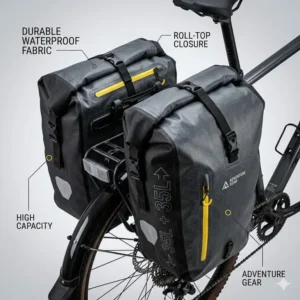
🛠️ Practical Usage Guide: Mastering Your waterproof bike bag
Step 1: The “Balance” Loading Technique
The most common mistake new riders make is overloading one side of the bike. If you’re using a single waterproof bike bag, place your heaviest items (like a U-lock or laptop) at the very bottom and as close to the wheel as possible. This lowers your center of gravity and prevents the bike from feeling “tippy” when you stand up to pedal.
Step 2: The Perfect Roll
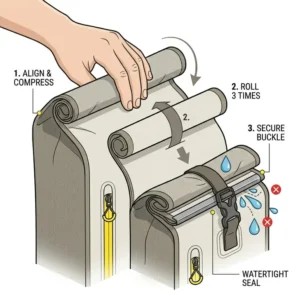
To ensure a true seal, you must roll the top of the bag at least three times. Before you clip the buckles, push as much air out of the bag as possible. This creates a vacuum effect that prevents water from “wicking” inward. If your bag looks like a puffy balloon, it’s not truly sealed—and it will act like a sail in a crosswind!
Step 3: Long-term Maintenance
Even the best TPU or PVC coatings can degrade if you leave them covered in road salt or grime. Every few months, wipe your bag down with lukewarm water and a mild dish soap. Avoid harsh chemicals or throwing them in the washing machine, as the agitation can delaminate the heat-welded seams. For the mounting hardware, a tiny drop of dry chain lube on the springs once a year will keep them snapping shut like new.
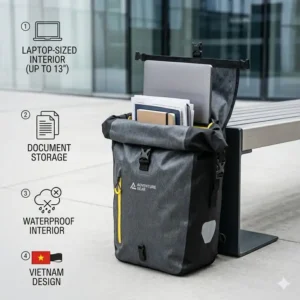
🎯 Buyer’s Decision Framework: Which Bag Fits Your Life?
Choosing a waterproof bike bag shouldn’t feel like a high-stakes math problem. Use this checklist to narrow down your search based on your specific 2026 riding habits:
-
The “Rain-or-Shine” Commuter: If you ride to work 5 days a week, regardless of the weather, prioritize a backpack hybrid. You need the organization for your laptop and the convenience of a quick-release system. Look for bags with “IPX5” or higher ratings.
-
The Weekend Tourer: If you’re planning 50-mile days on the US Bicycle Route System, you need raw volume and maximum durability. Traditional roll-top panniers with a secondary “locking” mechanism are your best bet to handle vibrations and heavy loads.
-
The Grocery Getter: If your trips are short and under 20 minutes, don’t overspend on high-end touring gear. A drape-over tandem bag or a budget-friendly TPU-coated bag will keep your bread dry during that 5-minute dash home.
-
The E-Bike Adventurer: For those on heavy e-bikes, check your rack’s tube diameter. Many modern e-bikes use thicker 16mm tubing. Ensure your chosen waterproof bike bag includes inserts for various rack sizes so you don’t end up with a rattling mess.
How to Choose the Right waterproof bike bag
Selecting the right gear in 2026 requires looking past the flashy colors. Here is my expert-led criteria for making the right call:
-
Check the IP Rating: Look for “IPX” codes. An IPX4 rating means it can handle splashes, but for true peace of mind in a storm, you want IPX6 (protection against powerful jets) or IPX7 (temporary immersion).
-
Mounting Compatibility: Measure your rack tubing. Most bags fit 8mm, 10mm, and 12mm rails. If you have an oversized rack, you might need a bag with a universal hook system like those found on the RhinoWalk models.
-
Heel Clearance: This is the “silent killer” of bike bags. Tapered bags (wider at the top, narrower at the bottom) are essential for riders with larger feet or shorter chainstays. There is nothing more annoying than your heel hitting your bag every single rotation.
-
Weight vs. Durability: Lightweight bags often use thinner coatings that can pinhole over time. If you’re commuting through city streets with sharp metal edges (looking at you, subway turnstiles), go for the heavier PVC or high-denier Nylon.
-
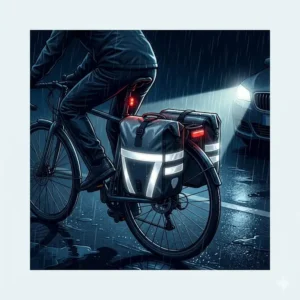
Visibility: In 2026, safety is paramount. According to the NHTSA, being visible from the side is just as important as front/rear lights. Choose bags with integrated reflective panels or loops to clip on extra safety lights.
Common Mistakes When Buying a waterproof bike bag
One of the biggest pitfalls I see is buyers confusing “water-resistant” zippers with “waterproof” construction. A water-resistant zipper will eventually leak under pressure. If you carry sensitive electronics, always opt for a roll-top design.
Another mistake is ignoring the “backplate” stiffness. A cheap bag with a floppy back can sag into your spokes, which isn’t just a gear-ruiner—it’s a safety hazard. Always feel the back of the bag; it should be rigid enough to maintain its shape even when empty. Finally, don’t assume “expensive” always means “better for you.” A $200 touring bag is overkill for a 2-mile ride to the coffee shop, and it might actually be more cumbersome to use daily than a simple $60 option.
What to Expect: Real-World Performance
On paper, a bag might hold 20 liters, but in reality, that volume changes once you roll the top down. Expect a 10-15% reduction in usable space once the bag is properly sealed. Furthermore, waterproof materials are non-breathable. This means if you put a wet rain jacket inside your bag, everything else in there will become damp from the trapped humidity. I always recommend “double-bagging” your most sensitive items (like a passport or phone) in a small dry sack inside the main pannier.
In terms of handling, expect your bike to feel a bit more “sluggish” in the rear. It takes about two days of riding to adjust your balance. However, the peace of mind knowing your laptop is safe from a sudden 2026 “super-storm” is worth the slight weight penalty.
Understanding IP Ratings and Safety Regulations
When shopping for a waterproof bike bag, you’ll see a lot of marketing jargon. The most reliable metric is the International Protection (IP) Code. This is a global standard (managed by the IEC) that defines how well an enclosure protects against solids and liquids.
For cyclists, the second digit is what matters. A rating of IPX5 is generally sufficient for most rain. However, if you are bike-packing and might have to forge a stream, IPX7 is the goal. Beyond waterproofing, ensure your bag complies with local safety standards regarding reflective surface area. Many European-made bags, for example, must adhere to strict DIN standards for reflectivity, which is a great bonus for US riders looking to stay visible during those dark winter commutes.
Long-Term Cost & Maintenance Analysis
When you look at a premium bag like an Ortlieb, the “cost per use” is actually much lower than a cheap alternative. If a $200 bag lasts 10 years of daily commuting, you are paying just $20 a year. A $40 bag that rips or leaks after one season ends up being more expensive (and more frustrating) in the long run.
Total cost of ownership also includes potential repairs. High-end brands often sell replacement parts—hooks, straps, and buckles—individually. This means if you break a clip in a crash, you don’t have to throw the whole bag away. In contrast, “disposable” budget bags often have sewn-in hardware that cannot be easily fixed. For the environmentally conscious rider in 2026, the ability to repair gear is a major value-add.
✨ Don’t Miss These Exclusive Deals!
🔍 Take your cycling setup to the next level with these carefully selected products. Click on any highlighted item to check current pricing and availability. These tools will help you create authentic riding experiences your family will love!
Conclusion: Riding Into the Rain with Confidence
Choosing the right waterproof bike bag is one of the best investments you can make for your cycling life in 2026. Whether you opt for the legendary durability of the Ortlieb Back-Roller or the clever urban functionality of the Two Wheel Gear Lite, the goal remains the same: protecting your gear so you can focus on the path ahead.
In my experience, the best bag is the one you don’t have to think about. It should click onto your rack effortlessly, stay silent over bumps, and keep your belongings bone-dry regardless of what the clouds decide to do. Take a moment to assess your typical ride distance and what you truly need to carry. Once you have the right shield on your bike, you’ll find that “bad weather” doesn’t really exist—only the wrong gear.
FAQs
❓ Are all bike bags waterproof?
✅ No, most are only water-resistant. A true waterproof bike bag will explicitly state “waterproof” and usually features heat-welded seams rather than traditional stitching. Look for roll-top designs for the highest level of protection…
❓ Can I use a waterproof pannier on a front rack?
✅ Yes, but you should choose a smaller “Front-Roller” style. Large rear panniers on a front rack can severely impact your steering and may hit the ground during sharp turns or on uneven trails…
❓ Do waterproof bags protect against heat?
✅ Not specifically. While they keep water out, the dark materials (especially PVC) can actually trap heat in direct sunlight. Avoid leaving sensitive electronics in a black bag during a heatwave…
❓ How do I fix a small hole in my bag?
✅ You can use a specialized TPU or PVC repair kit (like Tear-Aid). Clean the area thoroughly with alcohol before applying the patch to ensure a permanent, airtight seal that maintains the bag’s integrity…
❓ Is a roll-top better than a zipper?
✅ For absolute waterproofing, yes. Even “waterproof” zippers can fail over time or under extreme pressure. Roll-tops are mechanically simpler and much more reliable for long-term use in heavy rain…
Recommended for You
- seatpost bags for bicycles: 7 Best Durable Picks for Smart Riders in 2026
- 7 Best Bicycle Seat Bag Options in 2026: The Ultimate Expert Guide!
- 7 Best Bike Seat Pouch Options in 2026: The Ultimate Guide for Riders
Disclaimer: This article contains affiliate links. As an Amazon Associate, I earn from qualifying purchases. If you purchase products through these links, we may earn a small commission at no additional cost to you.
✨ Found this helpful? Share it with your friends! 💬🤗
[addtoany]
