
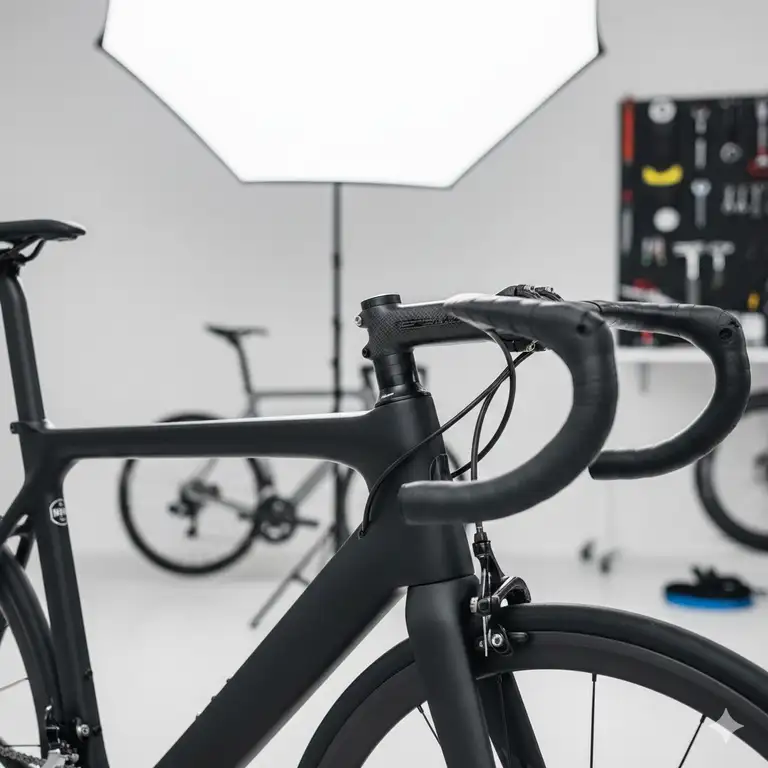
If you have ever felt a nagging pain in your lower back or felt like your steering was just a bit “twitchy” during a fast descent, I have some news for you. It might not be your frame, and it might not be your fitness. Often, the culprit is that small, unassuming chunk of metal or carbon connecting your handlebars to your fork: the road bike stem.
✨Was this helpful? Spread the word! 🚀
I have spent the last decade swapping out components on dozens of builds, and I can tell you that a road bike stem is one of the most underrated upgrades you can make. It is the literal bridge between your body and your machine. Choosing the right road bicycle stem can transform a bike that feels “okay” into a precision instrument that feels like an extension of your own arms. In this guide, I am going to walk you through everything you need to know about picking a bike stem for road bike setups in 2026, from material science to the physics of reach.
Road Bike Stem vs. Alternatives: Quick Comparison
Before we dive into the nitty-gritty, let’s look at how a dedicated road cycling stem compares to other cockpit setups you might encounter.
| Feature | Road Bike Stem | MTB Stem | Hybrid/City Stem |
| Primary Goal | Aerodynamics & Weight | Durability & Control | Comfort & Upright Position |
| Typical Length | 80mm to 130mm | 35mm to 60mm | 60mm to 100mm |
| Angle Range | -6° to -17° (Aggressive) | 0° to 6° (Neutral) | +10° to +35° (High Rise) |
| Material | Carbon or Lightweight Alloy | Heavy-duty Alloy | Basic Aluminum or Steel |
| Clamp Diameter | Standard 31.8mm | 31.8mm or 35.0mm | 25.4mm or 31.8mm |
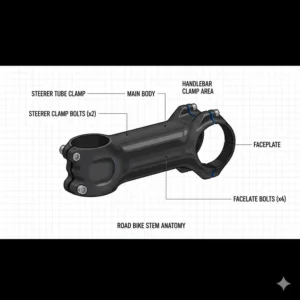
Top 7 Road Bike Stem Models: Expert Analysis
I have scoured the current 2026 market to find the most reliable, high-performing products available. These are not just random picks; these are the industry standards that professional mechanics and enthusiast riders swear by.
1. Zipp Service Course SL Stem
The Zipp Service Course SL Stem is widely considered the gold standard for professional-grade aluminum stems. It is crafted from 7075 aluminum, providing a strength-to-weight ratio that rivals many carbon options.
-
Technical Specifications:
-
Material: 7075 Aluminum
-
Weight: ~125g (100mm)
-
Angle: ±6° or ±17°
-
Clamp Diameter: 31.8mm
-
Hardware: Titanium bolts with Torx T25 heads
-
-
Professional Application: Ideal for criterium racers and gran fondo riders who need absolute stiffness during out-of-the-saddle sprints.
-
Customer Review Analysis: Users consistently praise the “rock-solid” feel. One reviewer noted, “The Zipp Service Course SL removed the front-end flex I felt with my stock OEM stem.” Some users mention the Torx bolts require a specific tool, which can be a minor inconvenience if you only carry hex keys.
-
Pros:
-
Extremely stiff and lightweight.
-
High-quality titanium hardware prevents corrosion.
-
Sleek, matte finish looks great on any bike.
-
-
Cons:
-
More expensive than entry-level alloy stems.
-
Torx bolts are less common for roadside repairs.
-
2. Ritchey WCS C220 84D Stem
Tom Ritchey is a legend in the cycling world, and the Ritchey WCS C220 84D Stem shows why. It features a unique 220-degree wrap design that holds the handlebar more securely than traditional 180-degree clamps.
-
Technical Specifications:
-
Material: 3D Forged 2014 Alloy
-
Weight: ~121g (100mm)
-
Angle: 84° (+6°/-6°)
-
Stack Height: 42mm
-
-
Warranty Information: Ritchey offers a 2-year limited warranty against manufacturing defects.
-
Customer Review Analysis: Riders love the “peace of mind” the C220 wrap provides. However, a few mechanics have noted that the bolt placement is a bit tight, making it slightly harder to reach with a bulky torque wrench.
-
Pros:
-
Distributes clamping pressure more evenly.
-
One of the lightest alloy stems on the market.
-
Classic aesthetic that never goes out of style.
-
-
Cons:
-
Tight bolt clearance can be finicky during installation.
-
Limited color options (mostly Blatte black).
-
3. Enve Road Stem
When money is no object and you want the absolute best in vibration dampening, the Enve Road Stem is the answer. This is a full-carbon masterpiece designed to shave grams while improving ride quality.
-
Technical Specifications:
-
Material: Unidirectional Carbon Fiber
-
Weight: ~120g
-
Angle: ±6°
-
Faceplate: Aluminum with Titanium bolts
-
-
Variants: Available in lengths from 80mm to 130mm. Includes an integrated computer mount option for Garmin/Wahoo.
-
Customer Review Analysis: Customers describe the ride as “smooth but snappy.” One long-distance rider mentioned, “The Enve Carbon Road Stem noticeably reduced the ‘buzz’ in my hands on chip-seal roads.”
-
Pros:
-
Superior vibration absorption compared to alloy.
-
Incredible aesthetic appeal.
-
Integrated accessory mounting system.
-
-
Cons:
-
Very high price point.
-
Requires strict adherence to torque specs to avoid cracking.
-
4. Deda Elementi Superzero Stem
Italian flair meets aerodynamic efficiency with the Deda Elementi Superzero Stem. This roadbike stem is designed with a flat top profile to slice through the wind.
-
Technical Specifications:
-
Material: 2014 Series Aluminum (3D forged)
-
Weight: ~145g
-
Angle: 82° (-8°)
-
Finish: Black-on-Black (BOB) or White
-
-
Professional Application: Best for aero-road bikes where every watt counts. It matches perfectly with Deda’s Superzero handlebars.
-
Customer Review Analysis: Reviews highlight the “aggressive look” and “aero gains.” Some users found it slightly heavier than minimalist stems, but they accepted the trade-off for the aerodynamic profile.
-
Pros:
-
Aerodynamic shaping.
-
Very high lateral stiffness.
-
Matches modern aero frames perfectly.
-
-
Cons:
-
Heavier than non-aero counterparts.
-
Only one angle option (-8°).
-
5. FSA SL-K Drop Stem
The FSA SL-K Drop Stem is a favorite for riders who need a lower “pro” position without a massive -17 degree angle. It features a “drop” design that lowers the handlebar height effectively.
-
Technical Specifications:
-
Material: AL2014 Aluminum with Carbon Faceplate
-
Weight: ~141g (100mm)
-
Angle: -20° (Extreme drop)
-
Hardware: Chromoly steel
-
-
Variants: Often found in the “Grey” or “Black” graphic versions.
-
Customer Review Analysis: Competitive racers love this for getting “low and aero.” One user warned, “Make sure your back can handle the -20 degree drop before buying; it’s aggressive!”
-
Pros:
-
Allows for an ultra-aggressive race fit.
-
Carbon faceplate adds a touch of class and stiffness.
-
Great price-to-performance ratio.
-
-
Cons:
-
Not suitable for casual or endurance riders.
-
Steel bolts can rust if not maintained.
-
6. Salsa Guide Stem
If you are looking for a road bike stem that is versatile and won’t break the bank, the Salsa Guide Stem is a workhorse. It is often used on gravel bikes but is perfectly at home on a bicycle stem road build.
-
Technical Specifications:
-
Material: 6061-T6 Aluminum
-
Weight: ~150g-180g (depending on size)
-
Angle: ±7°, ±15°, or ±25° (huge range)
-
-
Warranty Information: Salsa provides a 3-year warranty on their components.
-
Customer Review Analysis: Users appreciate the variety of angles. “I used the 25-degree version to get a more upright position on my old road bike, and it saved my neck,” said one reviewer.
-
Pros:
-
Extremely affordable.
-
Wide range of rise/drop options.
-
Very durable 6061 aluminum.
-
-
Cons:
-
Noticeably heavier than the premium options.
-
Boring aesthetics compared to Zipp or Enve.
-
7. Specialized S-Works Future Stem
The Specialized S-Works Future Stem is designed specifically for Specialized bikes equipped with the Future Shock system (like the Roubaix), but it is a masterclass in integration.
-
Technical Specifications:
-
Material: 7075 Aluminum
-
Weight: ~120g
-
Angle: 6°
-
Integration: Includes a specialized top cap for Future Shock.
-
-
Professional Application: Professional endurance racing (Paris-Roubaix style).
-
Customer Review Analysis: Specialized owners call this a “must-have” for a clean cockpit. It is sleek and lightweight, though non-Specialized owners won’t find much use for it.
-
Pros:
-
Lightweight for an integrated component.
-
Seamless look.
-
High-end 7075 alloy construction.
-
-
Cons:
-
Proprietary design (mostly for Specialized frames).
-
Expensive.
-
Top 7 Road Bike Stems: Spec Matrix
| Product Name | Material | Weight (approx.) | Best For |
| Zipp Service Course SL | 7075 Aluminum | 125g | All-around Racing |
| Ritchey WCS C220 | 2014 Aluminum | 121g | Lightweight Climbs |
| Enve Road Stem | Carbon Fiber | 120g | Luxury & Comfort |
| Deda Superzero | 2014 Aluminum | 145g | Aerodynamics |
| FSA SL-K Drop | Alloy/Carbon | 141g | Aggressive Fit |
| Salsa Guide | 6061 Aluminum | 165g | Budget & Fit Variety |
| Specialized S-Works | 7075 Aluminum | 120g | Specialized Integration |
✨ Don’t Miss These Exclusive Deals!
🔍 Take your cycling performance to the next level with these carefully selected products. Click on any highlighted item to check current pricing and availability. These tools will help you achieve the perfect fit and speed you deserve!
💬 Just one click – help others make better buying decisions too!😊
The Science of the Road Bike Stem: Why Length and Angle Matter
When I first started cycling, I thought a stem was just a stem. I was wrong. The geometry of your road bike stems (yes, it is plural because most of us end up with a drawer full of them) determines how much weight is over your front wheel.
Reach and Handling
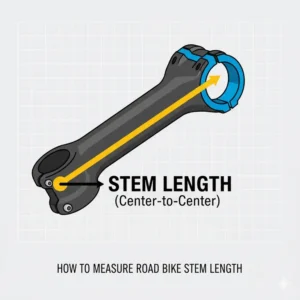
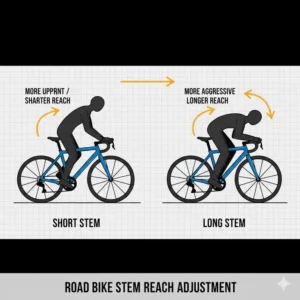
The “reach” of a road bike stem refers to its length. A 100mm road bike stem is the standard for many medium-sized bikes.
-
Longer Stems (110mm-140mm): These slow down the steering. This is great for high-speed stability. If you watch professional racers, they often use very long stems to get into a stretched-out, aerodynamic “long” position.
-
Shorter Stems (70mm-90mm): These make the steering feel “snappy” or “twitchy.” If your bike feels like it’s wandering at high speeds, your bike stem for road bike might be too short.
Stem Angle (Rise vs. Drop)
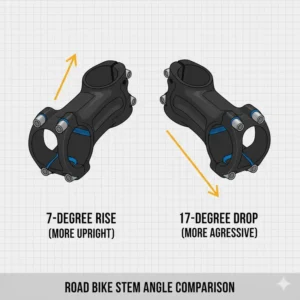
Most road cycling stem models come with a ±6 or ±7 degree angle. Because the head tube of your bike is already angled (usually around 72-73 degrees), a -6 degree stem actually sits nearly parallel to the ground.
-
Negative Angle (Drop): Lowers your bars, making you more aero but putting more strain on your core and neck.
-
Positive Angle (Rise): Flips the stem so it points up. This is a lifesaver for endurance riders or anyone with flexibility issues.
Material Comparison: Carbon vs. Aluminum
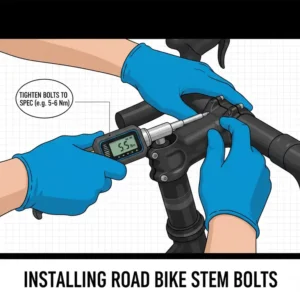
| Feature | Carbon Road Bike Stem | Aluminum Road Bike Stem |
| Weight | Slightly lighter (usually) | Very light in high-end alloys |
| Vibration Dampening | Excellent; absorbs road buzz | High; can feel “harsh” |
| Durability | High, but sensitive to crushing | Very high; more “idiot-proof” |
| Cost | Premium ($200 – $300+) | Affordable ($40 – $120) |
| Stiffness | Exceptional | High-end alloy is equal to carbon |
Buying Guide: How to Choose Your Road Bike Stem
Choosing a road bicycle stem isn’t just about picking the prettiest one. You need to consider your bike’s existing geometry and your personal goals.
1. Identify Your Clamp Size
In 2026, almost every road bike stem uses a 31.8mm clamp diameter. However, some older bikes use 26.0mm, and some newer “over-sized” setups use 35mm. Always check your handlebars before buying!
2. Determine Your Ideal Length
If you feel too “crunched up,” you likely need a longer road bike stem. If you are reaching too far and your shoulders hurt, go shorter. I always recommend changing length in 10mm increments. Jumping from a 90mm to a 120mm is a massive change that could cause injury.
3. Consider the Weight vs. Stiffness Balance
For a carbon road bike stem, you are paying for the way it feels. Carbon doesn’t just save weight; it changes the “texture” of the road. However, an aluminum road bike stem like the Zipp Service Course SL is often just as stiff and half the price. If you are a heavy rider or a powerful sprinter, stiffness is your priority. If you are a “weight weenie” climbing mountains, every gram counts.
Requirements Analysis: Who Should Buy What?
| Rider Type | Recommended Stem Type | Key Feature to Look For |
| Criterium Racer | Stiff Aluminum (e.g., Zipp) | Maximum lateral stiffness |
| Endurance/Century Rider | Carbon (e.g., Enve) | Vibration dampening |
| Commuter/Budget | 6061 Alloy (e.g., Salsa) | Price and durability |
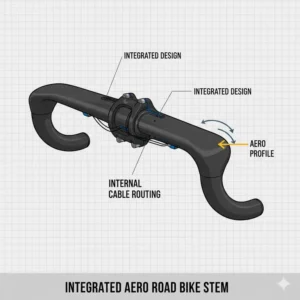
| Aero Enthusiast | Integrated/Flat Profile | Reduced frontal surface area |
Installation Tips for Your New Road Bike Stem
I have seen many people buy a beautiful road bike stem and then ruin it in the first five minutes of installation. Here is how to do it right:
-
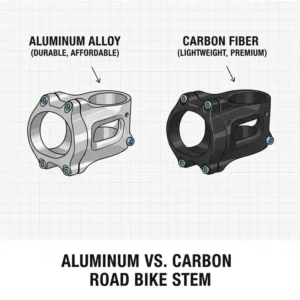
Use a Torque Wrench: This is non-negotiable, especially for a carbon road bike stem. Over-tightening can crack the carbon or strip the threads in an alloy stem. Most stems require 4-5Nm.
-
The “X” Pattern: When tightening the faceplate, always tighten the bolts in a diagonal “X” pattern. This ensures the pressure is even across the handlebar.
-
Check for Gaps: Ensure the gap between the faceplate and the stem body is even at the top and bottom (unless the stem is designed as a “zero-gap” model).
-
Carbon Paste: If you are using a carbon stem or carbon bars, use carbon assembly paste (grip paste). This allows you to use lower torque settings while preventing the bars from slipping.
Performance Metrics: Impact of Upgrading
| Metric | Stock OEM Stem | Premium Road Bike Stem |
| Weight | 180g – 220g | 110g – 140g |
| Steering Precision | Moderate (some flex) | High (instant response) |
| Aesthetics | Generic | Pro-level finish |
| Longevity | Standard bolts rust | Titanium/Stainless bolts stay clean |
Common Mistakes When Buying a Road Bike Stem
Even experienced cyclists make mistakes when shopping for a road bike stem. Here are a few to avoid:
-
Buying for “The Look” Instead of the Fit: We all want to look like we are in the Tour de France with a slammed, -17 degree road cycling stem. But if you can’t stay in that position for more than ten minutes, you will be slower overall because you’ll be constantly shifting around in discomfort.
-
Ignoring Stack Height: The “stack” is the thickness of the part of the stem that clamps to the fork. If your new road bicycle stem has a higher stack than your old one, you might not have enough fork steerer tube to safely clamp it.
-
Neglecting Bolt Maintenance: Sweat is incredibly corrosive. Because your road bike stem is directly under your face, it gets dripped on constantly. If you don’t have titanium bolts, put a little bit of grease on the bolt heads to prevent them from seizing.
Value Comparison: Budget vs. Premium
| Category | Typical Price Range | What You Get | Example |
| Budget | $30 – $60 | Heavy but reliable 6061 alloy. | Salsa Guide |
| Mid-Range | $70 – $130 | Lightweight 2014/7075 alloy, better bolts. | Ritchey WCS C220 |
| Premium | $250 – $400+ | Full carbon, aero shaping, Ti hardware. | Enve Road Stem |
✨ Don’t Miss These Exclusive Deals!
Whether you are looking for the lightest road bike stem for climbing or an aerodynamic road cycling stem for your next time trial, the products we have reviewed are the best the industry has to offer in 2026. Click the links to find your perfect fit today!
Conclusion: Finding Your Perfect Connection
The road bike stem might be a small component, but it plays a massive role in your cycling experience. Whether you choose a lightweight aluminum road bike stem like the Zipp Service Course SL for its sheer stiffness or a carbon road bike stem like the Enve for its road-smoothing properties, the right choice will make you want to ride longer and faster.
Remember to prioritize fit over fashion. A “slammed” stem looks cool in photos, but a comfortable stem wins the long rides. Take the time to experiment with different lengths and angles—your body will thank you.
FAQs
✅ Most professional road cyclists use stems ranging from 110mm to 140mm. This longer length allows for a more aerodynamic, stretched-out body position and provides greater stability during high-speed descents and intense bunch sprints in professional races…
✅ You can if the clamp diameters match (usually 31.8mm), but it isn’t recommended. MTB stems are much shorter (35-50mm), which will make road bike steering feel dangerously twitchy and result in a cramped, upright riding position…
✅ For most riders, carbon stems are a luxury rather than a necessity. While they offer superior vibration dampening and look incredible, a high-end aluminum stem provides similar weight and stiffness for significantly less money. Choose carbon for comfort…
✅ If you experience persistent neck, shoulder, or lower back pain, your stem length or angle is likely wrong. Feeling too stretched out suggests a stem that is too long, while feeling cramped usually indicates a short stem…
✅ Indirectly, yes. A stem with a greater negative angle lowers your torso, reducing your frontal surface area and aerodynamic drag. This can lead to higher speeds for the same power output, provided you can maintain the aggressive position… ❓ What length road bike stem do most professionals use?
❓ Can I use a mountain bike stem on my road bike?
❓ Is a carbon road bike stem worth the extra money?
❓ How do I know if my road bike stem is the wrong size?
❓ Does the angle of the road bike stem affect speed?
Recommended for You
- 7 Best bike back rack bag Picks for 2026: Ride in Style! Booyah!
- Front bike racks: 7 Best Picks for 2026 to Boost Your Gear Hauling!
- 7 Best Bike Rack with Bag Options in 2026: Expert Reviews
Disclaimer: This article contains affiliate links. If you purchase products through these links, we may earn a small commission at no additional cost to you.
✨ Found this helpful? Share it with your friends! 💬🤗