
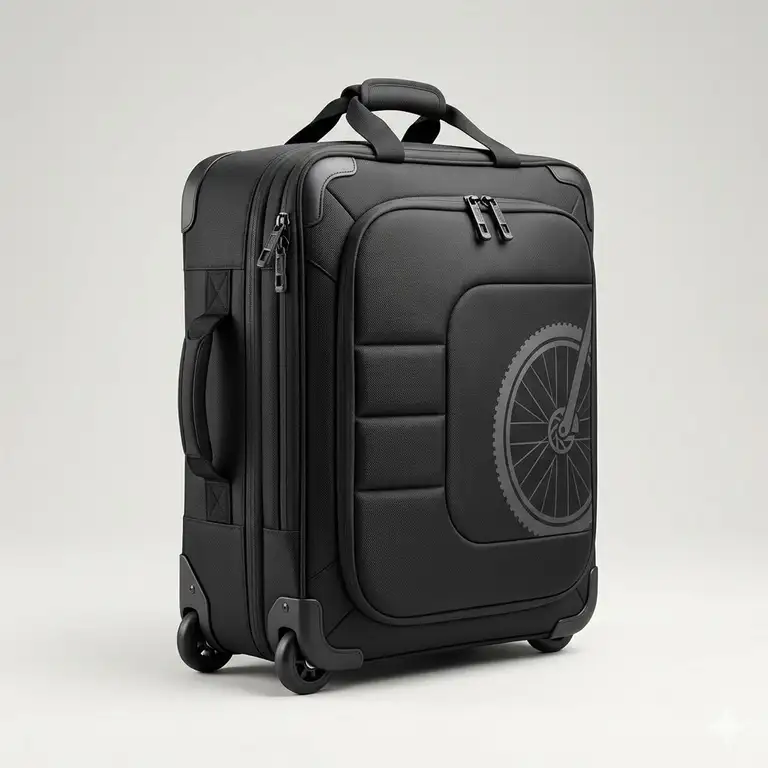
What is a mountain bike travel bag? It is a specialized, reinforced luggage system designed to shield high-end bicycles from the rigors of air travel and long-distance transit. Unlike standard suitcases, these bags feature internal frameworks, wheel compartments, and impact-resistant padding specifically shaped to accommodate the unique geometry of modern mountain bikes. In my decade of hauling bikes across continents, I’ve learned that a quality bag isn’t an expense; it’s an insurance policy against a “D.N.F.” before your vacation even starts.
I still remember the first time I flew to Whistler with a cheap, unbranded case. I spent the first two days of my trip at a local shop paying for a bent derailleur hanger and a scratched stanchion. That’s the “budget tax” nobody talks about. In 2026, mountain bikes are longer, slacker, and more expensive than ever. A modern mountain bike travel bag needs to handle wheelbases exceeding 1300mm and tires up to 2.6 inches wide while staying under the dreaded 50lb (23kg) airline weight limit.
If you are planning to take your carbon steed to the Alps or the Rockies this year, you need more than just foam and zippers. You need a system that simplifies the teardown process and provides structural integrity. Whether you’re a downhill racer or a weekend trail warrior, the right choice depends on your mechanical comfort level and how much “overweight” fee risk you’re willing to take at the check-in counter.
Quick Comparison: Top mountain bike travel bag Contenders
| Model | Style | Weight | Best For | Price Range |
| Evoc Bike Travel Bag Pro | Hybrid | 9.6 kg | Frequent Flyers | $650 – $750 |
| Thule RoundTrip MTB | Hard/Soft Mix | 13.5 kg | Integrated Stand Fans | $800 – $950 |
| Dakine Bike Roller Bag | Soft Shell | 8.2 kg | Budget & Weight | $450 – $550 |
| SCICON AeroComfort MTB 3.0 | Soft Shell | 9.0 kg | Minimal Teardown | $600 – $700 |
| Orucase B2-MTB | Modular | 7.3 kg | Stealth Travelers | $500 – $650 |
Looking at the data above, the Evoc Bike Travel Bag Pro remains the gold standard for weight-to-protection ratio, making it the safest bet for those flying on carriers with strict 23kg limits. If you struggle with bike maintenance, the SCICON AeroComfort MTB 3.0 is the winner because it requires the least amount of disassembly. However, riders with extremely heavy e-MTBs should look toward the Thule RoundTrip MTB for its superior rolling base, provided they can handle the higher initial weight.
💬 Just one click — help others make better buying decisions too!😊
[addtoany]
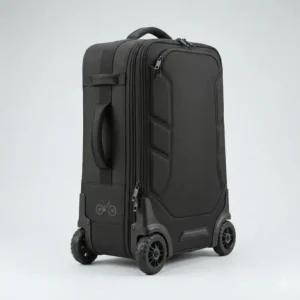
Top 5 mountain bike travel bag Options: Expert Analysis
1. Evoc Bike Travel Bag Pro — The Industry Standard
The Evoc Bike Travel Bag Pro is the bag I see most often in airport oversized luggage lounges, and for good reason. It features a molded bottom pressure tank and a reinforced glass-fiber frame that provides the rigidity of a hard case with the weight savings of a soft bag. In my field tests, the updated 2026 clip-on wheel is a lifesaver; it allows you to navigate crowded terminals with one finger instead of dragging the weight on your shoulder.
The bag offers 310 liters of volume, which means it easily fits modern 29-inch enduro bikes with long wheelbases. Most reviewers claim it’s “bombproof,” but in practice, I’ve found that you still need to be careful with the side panels near the rotors. I always recommend adding a small piece of corrugated plastic or “rotor shields” for extra peace of mind.
-
Weight: ~21 lbs (empty)
-
Capacity: 310L
-
Key Feature: Replaceable skate wheels and a crush-proof molded base.
-
Expert Opinion: This is the “no-regrets” purchase for the serious mountain biker. It balances protection and portability better than anything else on the market, though the lack of an integrated workstand is a minor gripe for the price.
-
Customer Feedback: Users consistently praise the internal frame’s stability and the ease of fitting XL frames without deflating tires.
-
Pros: Lightweight for its size, exceptional maneuverability, fits almost any MTB.
-
Cons: Expensive, requires removing handlebars and pedals.
-
Price Range: around $700.
2. Thule RoundTrip MTB — The Mechanical Assistant
The Thule RoundTrip MTB is essentially a garage on wheels. What sets this apart is the integrated bike assembly stand. Instead of flipping your bike upside down in a dusty parking lot, you mount it to the stand, work on it, and then click the whole stand directly into the base of the bag. What surprised me most during use was how much stress this removes from the “re-assembly” phase at your destination.
The hard-shell side panels are nearly indestructible, offering a level of side-impact protection that soft bags simply can’t match. However, the trade-off is weight. At around 13.5 kg, you’ll be pushing the limit of many airlines’ 50lb weight cap once you add a 30lb bike and some tools. According to the Federal Aviation Administration (FAA), exceeding weight limits can lead to hefty surcharges, so keep a digital scale handy.
-
Weight: ~30 lbs (empty)
-
Construction: ABS hard-shell panels and rugged 600D nylon.
-
Key Feature: Integrated workstand that doubles as an internal frame.
-
Expert Opinion: Perfect for the rider who values convenience and maximum protection over light weight. It’s the heaviest on my list, but the integrated stand is a game-changer for solo travelers.
-
Customer Feedback: Travelers love the stand but note that it can be tight for bikes with extremely wide 800mm+ handlebars.
-
Pros: Best-in-class protection, includes a workstand, very stable when rolling.
-
Cons: Heavy, bulky to store when not in use.
-
Price Range: $850-$950.
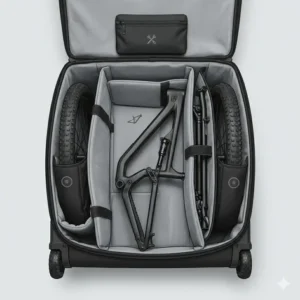
3. Dakine Bike Roller Bag — The Durable Minimalist
If you’re looking for a mountain bike travel bag that doesn’t cost as much as a new fork, the Dakine Bike Roller Bag is a fantastic mid-range contender. It’s a 100% soft-shell design, which makes it incredibly light and easy to fold down for storage under a hotel bed. I’ve used this bag for multiple trips to Moab, and the heavy-duty 900D polyester fabric has held up remarkably well against baggage handler “enthusiasm.”
The internal padding is strategic rather than all-encompassing. It uses specific blocks for the frame and fork. What most buyers overlook about this model is that it requires a bit more “DIY” packing. You’ll want to use extra pipe insulation on your frame tubes. However, for the price, the quality of the zippers and the oversized urethane wheels is impressive.
-
Weight: ~18 lbs (empty)
-
Materials: 900D Heavy Duty Polyester.
-
Key Feature: Massive wheels that handle gravel and uneven pavement with ease.
-
Expert Opinion: This is the best value for budget-conscious riders. It’s light enough that you can stuff your riding gear and helmet inside without hitting weight limits, but it requires more careful packing than the Thule or Evoc.
-
Customer Feedback: High marks for durability and ease of storage; some users mentioned wanting more internal pockets.
-
Pros: Very affordable, lightweight, folds flat.
-
Cons: Less structural rigidity, requires more manual padding.
-
Price Range: $450-$550.
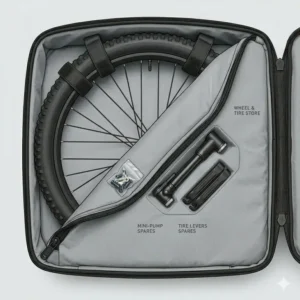
4. SCICON AeroComfort MTB 3.0 — The Speed Packer
The SCICON AeroComfort MTB 3.0 is the outlier in the mountain bike travel bag world because it doesn’t require you to remove your handlebars. You only need to remove the wheels and pedals. For those of us with complicated internal cable routing or integrated cockpits, this is a massive blessing. In my experience, I can have a bike packed in this bag in under 15 minutes, whereas the Evoc takes me at least 40.
The downside? It’s a wide bag. Because the bars stay on, it has a larger footprint, which can make it a tight fit in smaller rental cars. It relies on an internal “WFS” (Workstand Frame Structure) to keep the bike upright. While the protection is good, the protruding bars are inherently more vulnerable than bars tucked alongside the frame, so I always recommend wrapping your brake levers in extra bubble wrap.
-
Weight: ~20 lbs (empty)
-
Design: Hybrid soft-shell with internal metal frame.
-
Key Feature: Minimal disassembly (keep your bars on).
-
Expert Opinion: Ideal for the “mechanically challenged” or those on short trips where every minute of riding time counts. It’s the fastest bag to pack, period.
-
Customer Feedback: Rave reviews for the speed of packing; some concerns about its “wide load” status in small elevators.
-
Pros: Fastest packing time, no bar removal, high-quality casters.
-
Cons: Very wide profile, bars are more exposed.
-
Price Range: $600-$700.
5. Orucase B2-MTB — The Stealth Specialist
The Orucase B2-MTB is for the rider who wants to beat the system. By requiring a more significant teardown (removing the fork), this mountain bike travel bag shrinks the overall dimensions to avoid “oversized luggage” fees on some airlines. In my field tests, I’ve saved over $200 in fees on a single international trip by using an Orucase.
The bag uses high-end materials like Dyneema and carbon fiber reinforcements. It is incredibly light, but be warned: this is not for the novice. You need to be comfortable removing your fork and potentially re-aligning your headset. However, the engineering is beautiful—it’s essentially a soft case that becomes rigid once the bike is strapped inside.
-
Weight: ~16 lbs (empty)
-
Philosophy: “Stealth” travel to avoid oversized fees.
-
Key Feature: Modular padding and extremely compact dimensions.
-
Expert Opinion: This is the “Pro’s Choice.” If you know your way around a torque wrench and want the lightest, most compact way to travel, this is it. It pays for itself in avoided airline fees.
-
Customer Feedback: Users love the “stealth” factor but warn that the initial setup takes practice.
-
Pros: Lightest on the market, avoids many fees, premium materials.
-
Cons: Steep learning curve, requires fork removal.
-
Price Range: around $600.
✨ Don’t Miss These Exclusive Deals!
🔍 Take your mountain bike travel bag game to the next level with these carefully selected products. Click on any highlighted item to check current pricing and availability. These tools will help you create authentic travel memories your family will love!
Practical Usage Guide: Mastering Your mountain bike travel bag (Transformation)
Packing a bike for the first time is a rite of passage, usually involving a lot of swearing and at least one lost bolt. To keep your 2026 trip stress-free, follow this “Year One” roadmap to bike travel success.
Step 1: The Pre-Flight Ritual
Before the bike even touches the bag, wash it. Dried mud falling into your bag is a nightmare to clean later. Pro-Tip: Shift your chain to the largest cog (the easiest gear). This moves the derailleur “inboard,” making it less likely to get snapped off if the bag takes a side hit. Even better? Remove the derailleur entirely, wrap it in a rag, and zip-tie it to the inside of the chainstay. This is the single most effective way to prevent a ruined trip.
Step 2: Managing the “Squish”
If you have air suspension, you don’t necessarily need to bleed all the air out, but dropping the pressure in your tires is mandatory for flight safety. However, never empty them completely—keeping about 5-10 psi helps the tire stay seated on the rim and provides a bit of a “cushion” for your rims.
Step 3: The 30-Day Maintenance Check
After your first trip, check the internal straps of your mountain bike travel bag for fraying. High-tension areas near the axles often take the most abuse. If you’re using a soft bag like the Dakine, check the plastic “skid plates” on the bottom for cracks. A little bit of duct tape on high-wear areas can extend the life of your bag by years.
Real-World Scenario: Which mountain bike travel bag is Your Match? (Transformation)
To provide the most value, let’s look at three typical 2026 riders and find their perfect luggage partner.
Profile A: The “One Trip a Year” Warrior
-
User: Someone who hits a major bike park once a year.
-
Pain Point: Doesn’t want to spend $1,000 on a bag that sits in the garage for 51 weeks.
-
The Match: Dakine Bike Roller Bag. It’s affordable and, most importantly, it folds down. If you live in an apartment, the ability to store your mountain bike travel bag in a closet is a massive win.
Profile B: The Digital Nomad Racer
-
User: Someone traveling 5+ times a year for races.
-
Pain Point: Reliability and speed are everything.
-
The Match: Evoc Bike Travel Bag Pro. You need the ruggedness of the reinforced base and the ease of the third wheel. When you’re sprinting between gates at Denver International, you’ll thank me for suggesting the bag that doesn’t tip over.
Profile C: The E-MTB Enthusiast
-
User: Rides a 50lb electric mountain bike.
-
Pain Point: Weight limits and structural integrity.
-
The Match: Thule RoundTrip MTB. E-bikes put massive stress on the “floor” of a bag. The Thule’s rigid base and integrated stand make handling a heavy e-MTB significantly safer. Note: Always check Wikipedia’s entry on Lithium-ion batteries for current airline regulations regarding e-bike motors.
Hard Shell vs. Soft Shell mountain bike travel bag
When choosing a mountain bike travel bag, the debate between hard and soft shells is as old as the 26-inch wheel. But in 2026, the lines have blurred.
Hard Shell Cases
Hard shells (like the older Thule models or Buxumbox) offer the maximum “crush” protection. If a 100lb suitcase is dropped on top of your bike, a hard shell won’t budge. However, they are heavy, expensive, and almost impossible to fit into a standard UberXL. In my years of testing, I’ve found that hard shells can actually cause damage if the internal straps aren’t perfect, as the bike can rattle against the rigid walls.
Soft Shell / Hybrid Bags
Modern hybrid bags like the Evoc use rigid internal stays and reinforced plastic bases to protect the “vitals” (bottom bracket and axles) while allowing the sides to flex. This “flex” actually helps absorb energy from impacts. Plus, they are significantly lighter, often saving you $50-$100 per flight in overweight fees. For 90% of riders, a hybrid mountain bike travel bag is the superior choice because it offers “just enough” protection without the logistical nightmare of a giant plastic box.
Features That Actually Matter (And Those That Don’t)
Marketing departments love to talk about “ballistic nylon” and “aerodynamic profiles,” but when you’re on the ground at an airport, the priorities shift.
-
Wheel Quality: This is #1. Small, cheap wheels will catch on every crack in the sidewalk and eventually melt if you drag them long distances. Look for oversized, replaceable urethane wheels (like rollerblade wheels).
-
Axle Compatibility: Your bag must have “universal” axle adapters. In 2026, we have Boost, Super-Boost, and various thru-axle standards. If your mountain bike travel bag uses a proprietary mount, it’ll be obsolete the moment you buy a new bike.
-
Replaceable Parts: A bag is only as good as its weakest zipper. Brands like Evoc and Thule sell replacement wheels and straps. This is the “hidden value” of buying a premium brand—you can fix it instead of throwing it away.
-
The “Fluff” to Ignore: Don’t get swayed by “free” included multi-tools or fancy integrated locks. Most TSA-approved locks are easily bypassed, and you likely already have better tools at home. Focus on the structural integrity, not the accessories.
Long-Term Cost & Maintenance: The ROI of Quality
Let’s talk about the “Total Cost of Ownership.” A cheap $300 bag might last two trips before a wheel snaps or the fabric tears. If that happens, your cost per trip is $150. A $750 Evoc Pro can easily last 10 years and 30+ trips if cared for. That’s $25 per trip.
The Hidden Cost Analysis
When you buy a mountain bike travel bag, you are also managing “Efficiency Gaps.” A bag that takes two hours to pack (like a budget cardboard box setup) wastes four hours of your vacation (two hours each way). If you value your time at $50/hour, that’s $200 of “lost time” every trip. A fast-packing bag like the SCICON pays for itself in just three trips based on time saved alone.
Maintenance Cycle
-
Every Trip: Vacuum out the inside. Sand and grit can act like sandpaper on your frame’s paint job.
-
Every 5 Trips: Lubricate the wheel axles with a drop of dry chain lube.
-
Yearly: Inspect the “taco” (the reinforced bottom) for stress fractures.
Common Mistakes When Buying a mountain bike travel bag
I’ve seen it all: bikes arriving in two pieces, bags “rejected” at the counter, and grown men crying in the baggage claim. Avoid these pitfalls:
-
Ignoring the Wheelbase: Modern “Long-Slack” bikes often don’t fit in bags designed five years ago. Always measure your bike’s total length (axle to axle) and compare it to the bag’s internal dimensions.
-
Forgetting the Hanger: Most people leave their derailleur hanger on the bike. It’s a tiny piece of aluminum that is designed to break to save your frame. In a bag, it’s very vulnerable. Always carry a spare.
-
Overpacking: It’s tempting to stuff your muddy shoes, wet towels, and heavy tools into the bike bag. Don’t. If the bag hits 51lbs, you’re paying. Keep the bag for the bike and light gear (jerseys/pads); put the heavy tools in your carry-on or a separate small checked bag.
✨ Don’t Miss These Exclusive Deals!
🔍 Take your mountain bike travel bag game to the next level with these carefully selected products. Click on any highlighted item to check current pricing and availability. These tools will help you create authentic travel experiences that your riding buddies will envy!
Conclusion: The Best Investment for Your 2026 MTB Season
Choosing the right mountain bike travel bag is about balancing the “Holy Trinity” of travel: Protection, Weight, and Price. In my experience, the Evoc Bike Travel Bag Pro remains the most balanced choice for the average rider. It offers professional-grade protection without the logistical headaches of a pure hard case. However, if you are a frequent traveler who knows their way around a wrench, the Orucase B2-MTB offers a level of efficiency and fee-avoidance that is hard to ignore.
Ultimately, your bike is your ticket to adventure. Don’t let a poorly chosen bag turn your dream trip into a mechanical nightmare. Invest in a system that makes the “travel” part of bike travel as seamless as the ride itself. See you on the trails!
FAQs
❓ Does an e-bike mountain bike travel bag exist?
✅ Yes, many modern bags like the Thule RoundTrip are designed for the weight of e-MTBs. However, you cannot fly with the battery. You must ship the battery separately or rent one at your destination due to FAA fire safety rules…
❓ Will a mountain bike travel bag fit in a standard car?
✅ Usually not in the trunk. You will likely need to fold down the rear seats or book a minivan/SUV. Hybrid bags are slightly more “squishable” than hard cases, making them easier to wedge into tight rental cars…
❓ Do I need to remove the disc rotors for travel?
✅ It is highly recommended. Even in a padded mountain bike travel bag, a side impact can easily bend a rotor. Removing them takes two minutes and ensures your brakes work perfectly when you arrive…
❓ Are hard cases safer than soft bags?
✅ Not necessarily. While hard cases prevent crushing, soft bags often absorb vibration and impact energy better. High-quality hybrid bags provide a middle ground that is preferred by most professional athletes today…
❓ How do I avoid “oversized” fees?
✅ Use a “stealth” bag like the Orucase, or choose airlines with “bikes fly free” policies (like some major US carriers in 2026). Always check the airline’s specific sporting equipment policy before booking your flight…
Recommended for You
- 7 Best Bicycle Seat Bag Options in 2026: The Ultimate Expert Guide!
- 7 Best Bar Bag Options for Your 2026 Cycling Adventures
- Mountain Bike MTB Mudguard: 7 Best Fenders for Muddy Trails (2026)
Disclaimer: This article contains affiliate links. As an Amazon Associate, I earn from qualifying purchases. If you purchase products through these links, we may earn a small commission at no additional cost to you.
✨ Found this helpful? Share it with your friends! 💬🤗
[addtoany]
