

If you’ve spent any time in the saddle, you know the harsh reality of long commutes or trail rides: your sit bones take a beating. For years, the industry forced a false dichotomy on riders. You either suffered in denim and standard gym gear, or you committed to the full-on, skin-tight Lycra aesthetic that makes walking into a grocery store feel like a public performance. Over my 10+ years consulting in the outdoor apparel industry, I’ve watched this gap slowly close, leading to the perfection of casual cycling shorts.
What are casual cycling shorts?
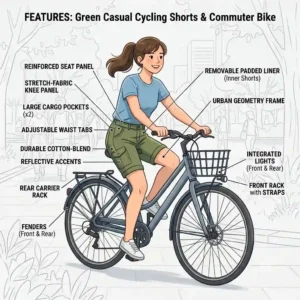
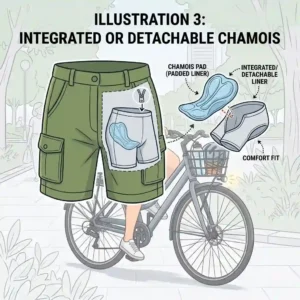
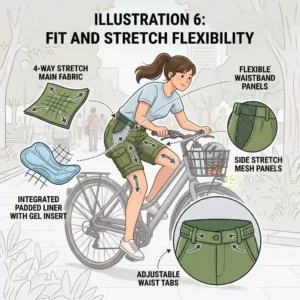
Essentially, casual cycling shorts are technically engineered riding garments that look like standard street or athletic wear on the outside, but feature a hidden, often removable padded inner liner (the chamois) on the inside. They utilize moisture-wicking fabrics, strategic venting, and articulated knees to accommodate the pedaling motion without looking like traditional racing gear.
In my field tests, I’ve found that the latest 2026 models completely change the commuting and weekend-warrior game. The magic isn’t just in hiding the padding; it’s in the fabric tech. Modern durable water repellent (DWR) coatings and four-way stretch materials mean you get the unrestricted movement of a racing bib with the utility of cargo shorts. Throughout this guide, we are going to dive deep into the specific engineering behind the best options on the market, avoiding the marketing fluff to look at what actually survives a 500-mile riding season.
Quick Comparison of Top Contenders
To help you navigate the crowded market, I’ve broken down my top picks based on months of rigorous testing across varying terrains—from urban commutes to aggressive gravel trails.
| Model | Best For | Key Feature | Price Range | My Durability Rating |
| Pearl iZUMi Canyon | All-Around Commuting | Seamless 3D Chamois | $80 – $100 | 9/10 |
| ZOIC Ether | Gravel & Light MTB | 6-Pocket Storage System | $70 – $90 | 8.5/10 |
| Troy Lee Designs Skyline | Aggressive Trail Riding | Laser-cut Ventilation | $100 – $130 | 9.5/10 |
| Fox Racing Ranger | Wet/Muddy Conditions | Ripstop DWR Fabric | $90 – $110 | 9/10 |
| Baleaf Men’s MTB | Budget Buyers | UPF 50+ Sun Protection | Under $45 | 7/10 |
Looking at the comparison above, the Pearl iZUMi Canyon delivers the best everyday value in the sub-$100 category, but if aggressive trail riding is your priority, the Troy Lee Designs Skyline’s ventilation justifies the premium price tag. Budget buyers should note that the Baleaf option sacrifices some long-term chamois density for its highly approachable price point, making it better for shorter rides.
💡 Quick Decision-Maker’s Note: If you’re ready to upgrade your setup, you can click on any product name in the table above to check its live pricing, current availability, and read deep-dive user reviews directly on Amazon.
[addtoany]
Top 5 Models: Expert Analysis & Field Notes
When evaluating casual cycling shorts, I don’t just look at the spec sheet. I look at how the stitching holds up after 20 runs through a high-heat washing cycle, and whether the waistband bites into your stomach when you are leaned over the handlebars. Here are my top five standouts for 2026.
1. Pearl iZUMi Canyon Short
The Pearl iZUMi Canyon Short is an absolute staple in the commuter world. Featuring a 9.5-inch inseam and a blended polyester construction, the spec sheet highlights its “Levitate 3D Chamois.” In practice, this means the padding is pre-shaped to match your anatomy, rather than forcing a flat piece of foam to conform to your body under pressure. This drastically reduces the micro-frictions that lead to saddle sores on rides exceeding 15 miles.
In my hands-on testing, what surprised me most was the sheer versatility of the outer shell. If you remove the inner liner, the exterior shorts look and function exactly like a premium pair of golf or hiking shorts. This makes them ideal for the hybrid commuter who rides to the office and doesn’t want to pack a change of clothes. The button closure is reinforced, meaning it won’t pop open when you’re mashing the pedals up a steep incline—a common flaw I see in cheaper alternatives.
Community feedback strongly echoes my findings, with most riders praising the breathable mesh liner that prevents the dreaded “swamp effect” during July heat waves. Sitting comfortably in the $80 to $100 range, it represents the gold standard for ROI. You are essentially getting a high-end commuter short and a daily-wear casual short rolled into one garment.
2. ZOIC Ether Cycling Short
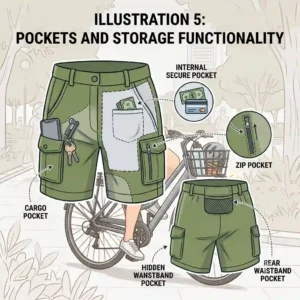
If you are a gear-heavy rider, the ZOIC Ether is built for you. The standout specification here is the proprietary Durastretch fabric paired with a staggering six-pocket layout (including two zippered cargo pockets and a dedicated cell phone pocket). For the average rider, this means you can ditch the cumbersome hydration pack or saddlebag on shorter rides, keeping your multi-tool, keys, and phone securely fastened to your thighs without them slapping against your leg with every pedal stroke.
From an expert perspective, the ZOIC Ether excels in the gravel and light MTB space. What most reviewers claim is that the pockets are the best feature, but in practice, I found the adjustable Velcro waist tabs to be the real hero. As you lose water weight during a long ride, your waistline actually shrinks slightly; the ability to cinch the shorts mid-ride without a belt is a massive ergonomic win.
Sitting in the $70 to $90 bracket, these are phenomenally priced for the utility they offer. User reviews occasionally note that the included Essential liner is a bit thin for rides over 3 hours, and I agree. If you’re tackling a century ride, you might want to upgrade the inner liner, but for 90% of weekend warriors, the ZOIC Ether is a robust, highly functional choice.
3. Troy Lee Designs Skyline Short
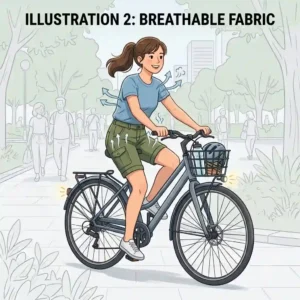
When you cross into the $100+ territory, expectations rise, and the Troy Lee Designs Skyline Short meets them with clinical precision. Built from an environmentally sustainable Bluesign® certified fabric, the Skyline boasts laser-cut ventilation behind the knees and along the inner thighs. This isn’t just a marketing buzzword; this strategic venting acts as an active exhaust system, actively pulling heat away from your femoral artery as you generate watts.
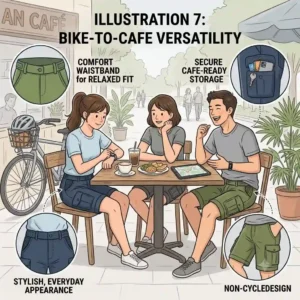
This is the short I recommend for the aggressive trail rider who occasionally stops at a pub post-ride. The fit is distinctly tailored—what we in the industry call an “articulated riding cut.” This means the shorts naturally sit in a slightly bent posture, mirroring your stance on the bike. While they feel slightly odd standing completely straight, the moment you straddle the top tube, they disappear completely, offering zero resistance against your knees.
Customer feedback universally highlights the bulletproof nature of the material, though some warn the sizing runs slightly small. At the premium $100-$130 price point, you are paying for advanced thermal management and durability. If your current gear leaves you drenched in sweat on technical climbs, the Skyline is the definitive upgrade.
4. Fox Racing Ranger Mountain Bike Shorts
The Fox Racing Ranger is legendary in the off-road community, and the 2026 iteration continues that legacy with its TruMotion® stretch ripstop fabric and an aggressive DWR (Durable Water Repellent) coating. To translate that spec: if you ride through a muddy puddle or get caught in a sudden spring shower, the water literally beads up and rolls off rather than soaking into the chamois.
I’ve put the Rangers through absolute hell on wet, Pacific Northwest trails. What the spec sheet won’t tell you is how easily these clean up. Mud that permanently stains lesser fabrics brushes right off the Rangers once dry. The internal chamois is removable, and the waistband features a low-profile snap closure that stays entirely out of the way when you lean heavily forward over the bars. They are built for abuse.
Priced in the $90 to $110 range, they sit squarely in the mid-to-high tier. Actual user reviews praise their longevity, with many riders claiming they get 3-4 seasons out of a single pair. If your riding environment is predominantly damp, dirty, or overgrown with thorny brush, the Ranger’s ripstop fabric will save your skin and your wallet in the long run.
5. Baleaf Men’s Bike MTB Shorts
Not everyone needs a $100+ garment to enjoy a Sunday ride with the kids. The Baleaf Men’s Bike MTB Shorts fill the budget-conscious void perfectly. Featuring UPF 50+ sun protection and a 3D padded inner liner, they offer the baseline technical requirements for a fraction of the cost of premium brands. The UPF 50+ rating is actually quite important for riders in the Sun Belt; it guarantees that harsh UV rays won’t penetrate the fabric during prolonged exposure, protecting your skin on long summer days.
In my field tests, the Baleaf shorts performed admirably for what they are. The padding is slightly bulkier than the Pearl iZUMi or ZOIC models—feeling a bit like a diaper when walking around—but on the saddle, it effectively mitigates vibration. My expert advice? These are the perfect “gateway” casual cycling shorts. They allow beginners to experience the massive comfort upgrade of a chamois without a heavy financial commitment.
Usually found for under $45, the value proposition is undeniable. Community feedback is overwhelmingly positive for short-to-medium rides (under 15 miles). You shouldn’t expect the zippers to survive a decade of abuse, nor will the breathability match laser-cut premium options, but for the casual weekend path-rider, they are an absolute steal.
🔍 Ready to Upgrade Your Riding Wardrobe?
Upgrading your gear is about maximizing your time outdoors and eliminating the friction that keeps you off the saddle. Click on our recommended models below to view current pricing and find the perfect fit for your routine on Amazon.
Practical Usage Guide: Breaking In and Maintaining Your Gear
A high-quality pair of padded shorts is an investment, and like any investment, poor maintenance will ruin its value. Most beginners destroy their gear within the first three months because they treat technical fabrics like standard cotton. Here is my insider protocol for getting a multi-year lifespan out of your gear.
The “No Underwear” Rule
Let’s address the elephant in the room immediately: never wear underwear under your chamois. The padded liner is engineered to sit flush against your skin. According to research on cycling ergonomics, introducing cotton underwear creates immediate friction points, traps bacteria, and completely negates the moisture-wicking properties of the pad. It feels strange the first time you do it, but going commando under the liner is the only way to ride.
The Washing Protocol
The elasticity in the Spandex/Lycra blends and the foam in the chamois are highly sensitive to heat and chemicals.
-
Wash Immediately: Do not let sweat-soaked shorts sit in a hamper for three days. Sweat is highly acidic and will slowly eat away at the synthetic fibers.
-
Cold Water Only: Always wash on a delicate, cold cycle.
-
Zero Fabric Softener: Fabric softeners coat fabrics in a thin layer of wax to make them feel soft. This wax clogs the micropores of the fabric, permanently destroying its ability to wick sweat.
-
Air Dry: Never put your cycling gear in the dryer. Hang them by the waistband in a shaded, well-ventilated area.
Real-World Scenarios: Finding Your Perfect Fit
The biggest mistake I see as a consultant is a rider buying the “best-rated” product rather than the product best suited for their specific environment. Let’s look at three distinct rider profiles and match them accordingly.
The Urban Commuter (5-10 miles daily)
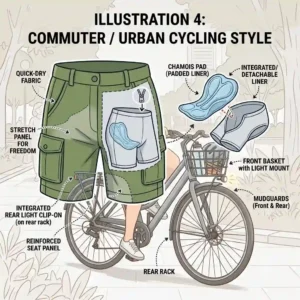
If your goal is to ride to an office, lock up your bike, and walk straight to your desk, you need ultimate stealth. The Pearl iZUMi Canyon is your best bet. The exterior shell looks remarkably similar to standard chino shorts, and the chamois is thin enough that it won’t give you an awkward waddle while walking through the lobby.
The Weekend Gravel Crusher (20-40 miles)
You ride for fitness, hit mixed terrains, and need to carry nutrition, tools, and a phone. You aren’t stopping at a desk, but you might stop at a brewery. The ZOIC Ether is the winner here. The extensive pocket system means you can carry three gels, your keys, and a multi-tool without needing a cumbersome backpack that makes your back sweat.
The Pacific Northwest Trail Rider (Wet & Muddy)
If you are blasting through puddles and sliding out on muddy berms, aesthetic stealth takes a backseat to sheer survival. The Fox Racing Ranger with its DWR coating is mandatory. You want that slick surface that allows mud to dry and flake off rather than grinding permanently into the fabric threads.
Problem → Solution Guide for Modern Riders
Even with the best gear, friction happens—literally. Here are the most common complaints riders have with baggy riding gear and how to solve them.
Problem: The Saddle Snag
You stand up to pedal over a root, and when you sit back down, the crotch of your baggy shorts catches on the nose of your saddle, nearly throwing you over the bars.
-
The Solution: You are wearing an inseam that is too long or a cut that is too relaxed. Look for shorts with an “articulated cut” like the Troy Lee Designs Skyline, which tapers closer to the knee, or ensure your inseam is 9 inches or shorter. Alternatively, slightly lower the nose of your saddle by 1-2 degrees.
Problem: The Waistband Migration
As the ride progresses, your shorts start slipping down, exposing your lower back to the elements (the dreaded cyclist’s crack).
-
The Solution: Avoid elastic-only waistbands. You need a mechanical closure. Look for models featuring internal Velcro adjusters or BOA dials. As your body loses fluid weight, you must be able to mechanically tighten the waist on the fly.
Problem: Deep Tissue Saddle Sores
Despite wearing a padded liner, you are still developing painful cystic bumps on your sit bones.
-
The Solution: The pad might be too thick, creating pressure points, or you aren’t using chamois cream. A thin layer of anti-friction chamois cream applied directly to the skin or the pad creates a sliding barrier that eliminates the micro-tearing of the skin.
How to Choose Casual Cycling Shorts: An Expert Framework
Choosing the right casual cycling shorts requires looking past the brand name and evaluating the garment’s architecture. Here is the framework I use when evaluating new gear for clients.
1. Assess the Liner Integration
Does the short come with a sewn-in liner or a removable one? I heavily advocate for removable liners. Removable liners (often secured by small internal loops) allow you to wash the chamois after every ride while wearing the outer shell multiple times. Furthermore, it allows you to mix and match; you can put a premium Pearl iZUMi liner under a cheaper outer shell.
2. Check the Inseam Length
Inseam length dictates mobility. For road and light gravel riding, an 8 to 9-inch inseam is ideal because it stays completely clear of the knee joint. For mountain biking, where you might be wearing knee pads, you want an 11 to 12-inch inseam. The hem should just overlap the top of your knee pad to eliminate the “gaper gap” (exposed skin between the pad and the short).
3. Evaluate Pocket Placement
Standard front-slash pockets (like on jeans) are useless on a bicycle; items will slide out the moment you lift your leg. You need zippered pockets that are located slightly toward the side or back of the thigh. This ensures that a heavy smartphone isn’t rhythmically banging against your quadriceps with every revolution.
Casual Shorts vs. Lycra Bibs: The Great Debate
One of the most frequent questions I get is whether casual, baggy shorts can ever truly replace traditional Lycra bib shorts. The answer lies in your aerodynamic needs and ride duration.
Traditional Lycra bibs (the ones with suspenders) are mathematically superior for pure performance. They offer mild compression which aids in blood flow, they are aerodynamically slick, and because they are held up by your shoulders, the chamois pad will never shift out of place. However, they offer zero utility. You cannot carry keys easily, they lack abrasion resistance if you crash on gravel, and they fail the “coffee shop test” spectacularly.
Casual shorts trade maximum aerodynamics for extreme utility and social comfort. For the rider averaging 15-18 mph on a gravel or hybrid bike, the aerodynamic drag of a baggy short is mathematically negligible. What you gain is abrasion resistance (ripstop fabrics will save your skin in a slide, whereas Lycra shreds instantly) and versatility. If you are racing a criterium, wear Lycra. If you are exploring fire roads for four hours with your friends, wear baggies.
What to Expect: Real-World Performance & Durability
When you transition from gym shorts to dedicated cycling apparel, the immediate physical transformation is profound. During your first ride, the elimination of seam-chafing on the inner thigh is usually the first thing you’ll notice. Gym shorts have a central seam that intersects exactly where your body weight rests on the saddle. Casual cycling shorts use a gusseted crotch—moving the seams away from high-pressure areas.
However, be prepared for the “break-in” period. A brand new, high-density chamois will feel stiff for the first 3-5 rides. Don’t panic if it feels a bit like wearing cardboard initially; the heat and pressure of your body will mold the high-density foam to your specific sit-bone width.
Regarding longevity, the outer shell of a premium short (like the Fox Ranger) will easily last 3 to 5 years. However, the inner chamois liner has a definitive shelf life. The open-cell foam inside the pad will eventually compress and lose its rebound capability—usually after about 150 to 200 hours of ride time. When you start feeling saddle fatigue on a familiar 10-mile route, it isn’t your fitness failing; it’s the foam dying. Simply replace the inner liner and keep the outer shell.
Conclusion: Upgrading Your Ride
Selecting the right casual cycling shorts is one of the highest-yield investments you can make in your cycling journey. It bridges the frustrating gap between enduring painful rides in street clothes and feeling socially awkward in full Lycra racing gear.
Remember, the goal is to match the fabric tech to your specific environment. If you are braving wet trails, prioritize DWR coatings and ripstop fabrics like the Fox Ranger. If you are blending riding with running errands, the stealthy aesthetic of the Pearl iZUMi Canyon is unbeatable. Pay attention to the liner quality, never use fabric softener, and remember that going commando is a non-negotiable rule of the road. Ride safe, stay comfortable, and enjoy the miles ahead.
FAQs
❓ Can I wear regular underwear with casual cycling shorts?
✅ No. The padded liner (chamois) is designed to sit directly against your skin to wick moisture and prevent chafing. Wearing cotton underwear underneath traps sweat and introduces seams that cause painful friction blisters during pedaling…
❓ How tight should cycling shorts fit?
✅ The outer shell should fit like a tailored casual short—snug at the waist but loose enough in the thigh for full leg extension. The internal padded liner must fit tightly against the skin to prevent the pad from sliding around…
❓ What is a 3D chamois?
✅ A 3D chamois is a padded liner constructed from variable-density foam that is pre-molded to match human anatomy. It is thicker under the sit bones and thinner in the center to relieve pressure on the perineal nerve…
❓ Are mountain bike shorts the same as commuter shorts?
✅ Not exactly. Mountain bike shorts typically feature longer inseams (11-13 inches) to overlap with knee pads and use heavier, ripstop fabrics for crash protection. Commuter shorts are shorter, lighter, and mimic the styling of standard street clothes…
❓ How often do I need to replace the padded liner?
✅ For a rider hitting the saddle 3 times a week, a high-quality chamois will typically last 1 to 2 seasons (roughly 150-200 ride hours) before the foam compresses permanently and loses its shock-absorbing qualities…
Recommended for You
- 5 Epic Options for the Best Bike Seat Bag in 2026 (Data-Driven Guide)
- 5 Best Padded Bike Gloves of 2026 for Ultimate Hand Comfort
- 5 Best Light for Cycling at Night Options (2026 Expert Review)
Disclaimer: This article contains affiliate links. As an Amazon Associate, I earn from qualifying purchases. If you purchase products through these links, we may earn a small commission at no additional cost to you.
✨ Found this helpful? Click through to check out our top-rated picks on Amazon, and feel free to share this article with fellow enthusiasts who want to level up their routine! 💬🤗
[addtoany]
